April 27, 2023
Social Proof Marketing Examples: 12 Brands Worth Learning From
X minute de lecture

Une infrastructure sociale qui évolue avec vous.
Commencez votre essai gratuit ou laissez-nous vous montrer la plateforme en action.
Buyers rarely take a brand's word at face value anymore. They check reviews, scroll through tagged photos on Instagram, and look for proof that other people have already used a product before they spend any money. That is why social proof marketing examples matter so much when you plan your own strategy. Seeing how successful brands use customer reviews, user-generated content, testimonials, and influencer posts gives you a clearer picture of what works and what does not.
In this post, you will see 12 social proof marketing examples from brands like GoPro, Airbnb, Glossier, and Slack. You will also learn the main types of social proof in marketing, why each one works, and how to add them to your own website without a heavy lift.
What Is Social Proof Marketing?
Social proof marketing uses other people's actions, opinions, and content to influence new buyers. The idea comes from psychologist Robert Cialdini, who described social proof as the tendency to copy others' behavior when we are unsure what to do.
In practice, this looks like reviews on a product page, customer photos in an Instagram feed, testimonials in an email, or a "10,000 customers served" line on a homepage. Each one signals that other people already trust the brand.
Why Social Proof Marketing Works
Most buyers do their own research before buying anything. They want to see honest opinions from people like them, and they treat that opinion as more credible than a brand's own marketing.
The numbers back this up:
- 95% of consumers said they regularly read product reviews as part of their shopping journey.
- The same study also highlighted that only 43% said they would buy a product with zero ratings or reviews.
- 65% of global shoppers rely on UGC such as ratings, reviews, photos, and videos in their buying decisions, according to Bazaarvoice's Shopper Experience Index.
- 83% of global respondents said they trust recommendations from people they know.
- 76% of users say social content influenced a purchase in the last six months, rising to 90% among Gen Z.
The pattern is clear from this. People want to see proof from real users before they buy.
8 Types of Social Proof in Marketing
Before looking at the examples, it helps to know the formats most brands use. Each type works slightly differently and fits different stages of the buying journey.
- Customer reviews and ratings: star ratings, written reviews, and verified buyer feedback.
- User-generated content (UGC): Photos, videos, and posts created by real customers on social media.
- Testimonials and case studies: Long-form stories from named customers, often with results.
- Expert and influencer endorsements: Recommendations from creators, industry experts, or celebrities.
- Trust badges and certifications: Awards, security seals, "as seen in" logos, and partner badges.
- Social media activity: Follower counts, mentions, hashtag activity, and shares.
- Sales and usage numbers: "Used by 10,000 companies" or "1 million downloads" style stats.
- Real-time activity notifications: Pop-ups that show recent purchases or signups on the website.
12 Social Proof Marketing Examples From Real Brands
Each of these examples of social proof in marketing works for a different reason. Some build trust at the top of the funnel. Others nudge hesitant buyers right before checkout.
1. GoPro Awards: User-Generated Content as a Marketing Engine
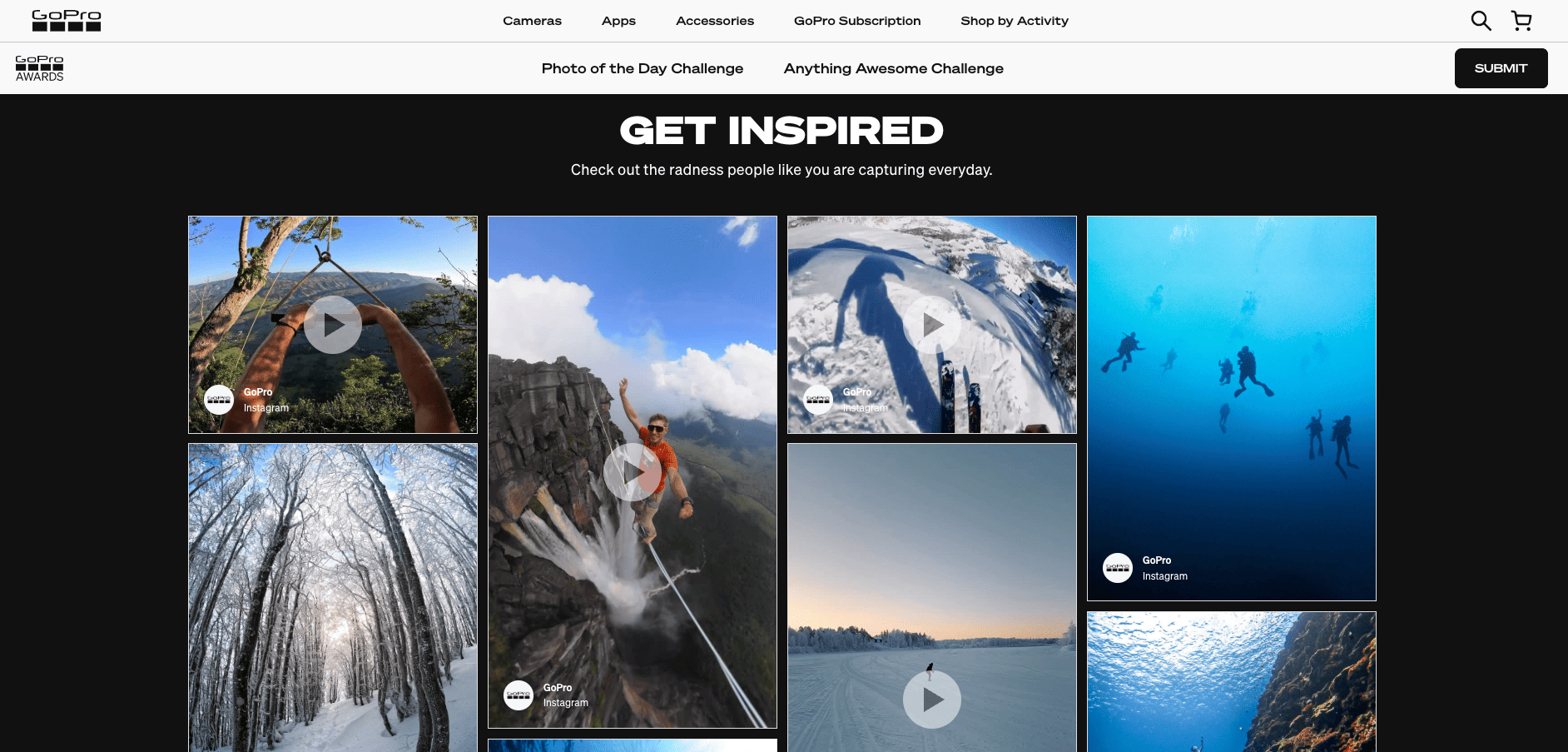
GoPro built one of the most-cited UGC programs in marketing. The brand encourages customers to submit their best clips and photos through the GoPro Awards program, which invites users to enter footage across categories ranging from action sports to travel to everyday moments. Winners are featured across GoPro's social media, website, and promotional campaigns.
The 2019 "Million Dollar Challenge" invited users to submit their most epic footage for a chance to share in a $1 million prize, receiving over 42,000 submissions from 170 countries. The final highlight reel used only customer footage and went on to win industry recognition.
This strategy works because it turns customers into a content engine, and every clip doubles as proof that the cameras deliver in real conditions.
2. Gymshark: #Gymshark66 and Athlete-Driven UGC

Gymshark is one of the strongest active examples of social proof in marketing. The British fitness apparel brand transformed from a 2012 startup into a global brand valued at £1.5 billion through a distinctive digital-first marketing approach centered on influencer partnerships, social media engagement, and user-generated content. Latterly
The brand's #Gymshark66 challenge invites followers to share their personal fitness journey over 66 days using the hashtag. Viral fitness challenges like "66 Days: Change Your Life" racked up 200M+ views on TikTok, and Gymshark regularly reposts customer transformation clips, workout videos, and progress shots across its channels. TacticOne
It also runs the Gymshark Athlete Program, a long-running creator partnership where fitness influencers wear the gear in everyday workouts rather than in scripted ads.
Here, real customers and athletes do the marketing, and the content stays close to how buyers actually use the product.
3. Airbnb: Reviews as the Core of the Booking Decision

Open any Airbnb listing, and the first thing most people scroll to is the reviews section. Hosts with hundreds of five-star reviews and a "Superhost" badge convert far better than new listings with little history.
Airbnb made review-based social proof the backbone of its product. Every stay ends with a request to leave a review, and that volume becomes the social proof for the next guest.
A two-sided rating system makes reviews feel honest, and the volume reduces the perceived risk of staying in a stranger's home.
4. Slack: Productivity Stats and Customer Quotes

Slack pairs hard numbers with named customer quotes on its homepage. The brand highlights metrics like 97 minutes saved weekly with Slack AI, a 36% increase in sales win rates, and 32% faster incident resolution time, sourced from internal pilots and Salesforce Success Metrics data covering 2,165 customers across nine countries.
Sitting right below the stats are direct quotes from Brad Lightcap (COO, OpenAI) and Stephen Satzberg (Director, Spotify Advertising), both endorsing Slack by name.
Quantified results answer the "does this actually work?" question, while named quotes from senior leaders at recognizable companies do the heavy lifting on trust. Together, they cover both logical and emotional buying triggers.
5. Petzyo: Real-Time Purchase Notifications
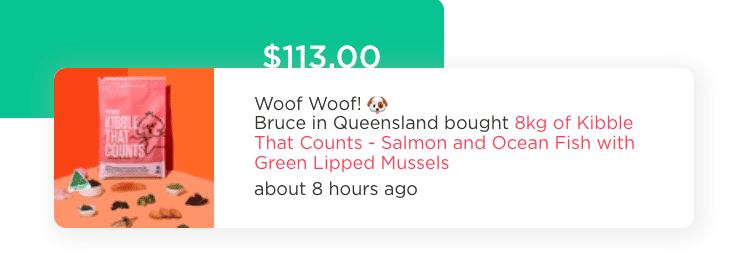
Petzyo, an Australian premium dog food brand, runs small pop-up notifications on its website showing recent purchases. A typical message reads: "Woof Woof! 🐶 Bruce in Queensland bought 8kg of Kibble That Counts - Salmon and Ocean Fish with Green Lipped Mussels, about 8 hours ago."
The brand uses Fomo to create this social proof, recreating the convenient experience of a conventional shop online. Each notification names a real product, a real customer, and a real location, which makes the notification feel grounded rather than salesy.
Real-time activity notifications like this signal that the brand is busy without resorting to fake urgency, and they help new visitors trust an unfamiliar DTC brand.
6. Airtasker: Five-Star Tasks on the Homepage
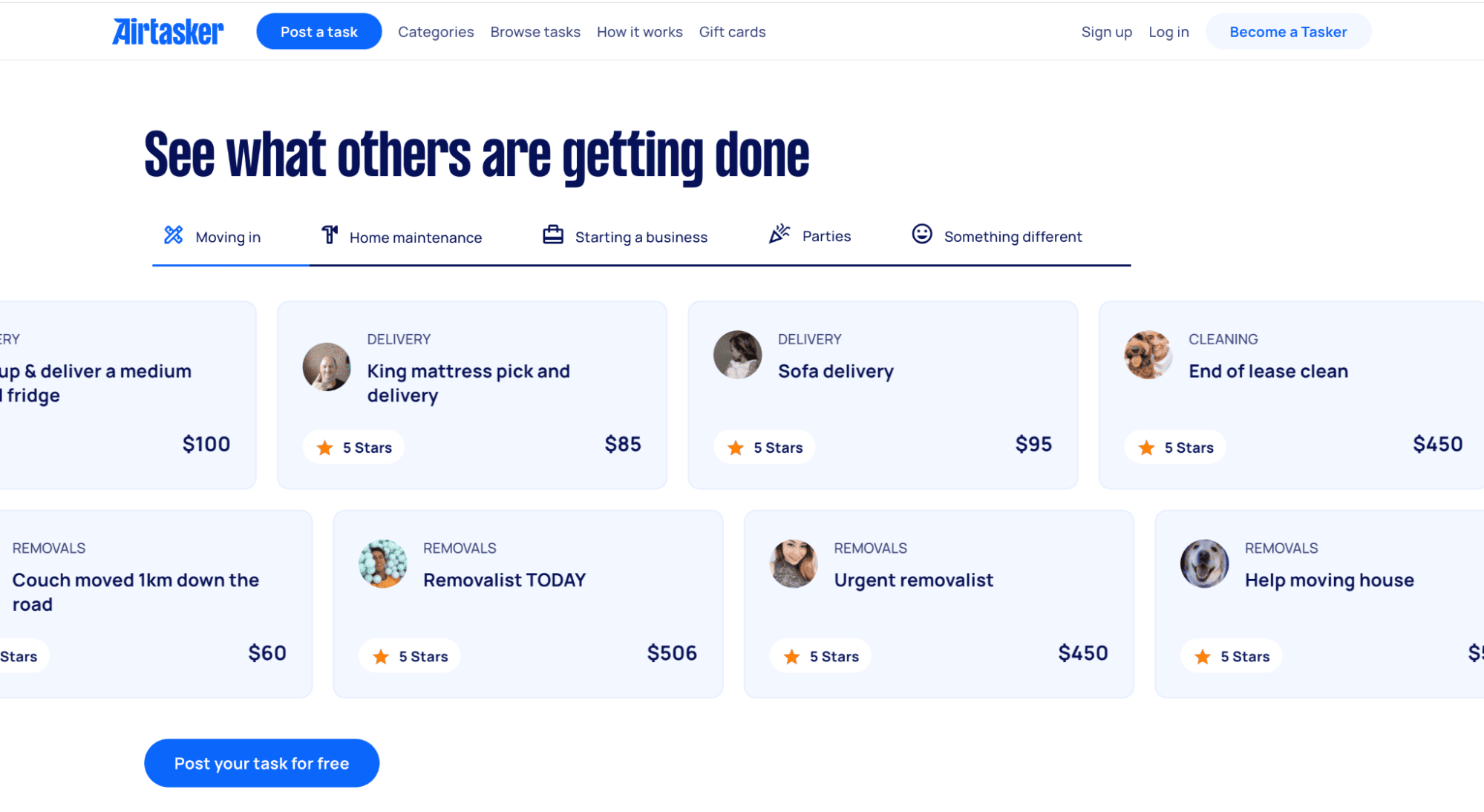
Airtasker takes a smart angle on its homepage with a section titled "See what others are getting done." Instead of generic testimonials, it shows real, recent tasks across categories such as moving in, home maintenance, starting a business, and parties. Each card includes the Tasker's profile photo, the task type, a 5-star rating, and the price paid (for example, "King mattress pick and delivery, 5 Stars, $85").
This works as triple-layered social proof: it shows the platform is active, that Taskers are highly rated, and that pricing is transparent. Visitors who hesitate to post their own task can see exactly what people like them have already done.
Concrete tasks with real numbers and ratings remove the guesswork for first-time users and make the platform feel trusted and active.
7. Casetify: Influencer and Community UGC Galleries
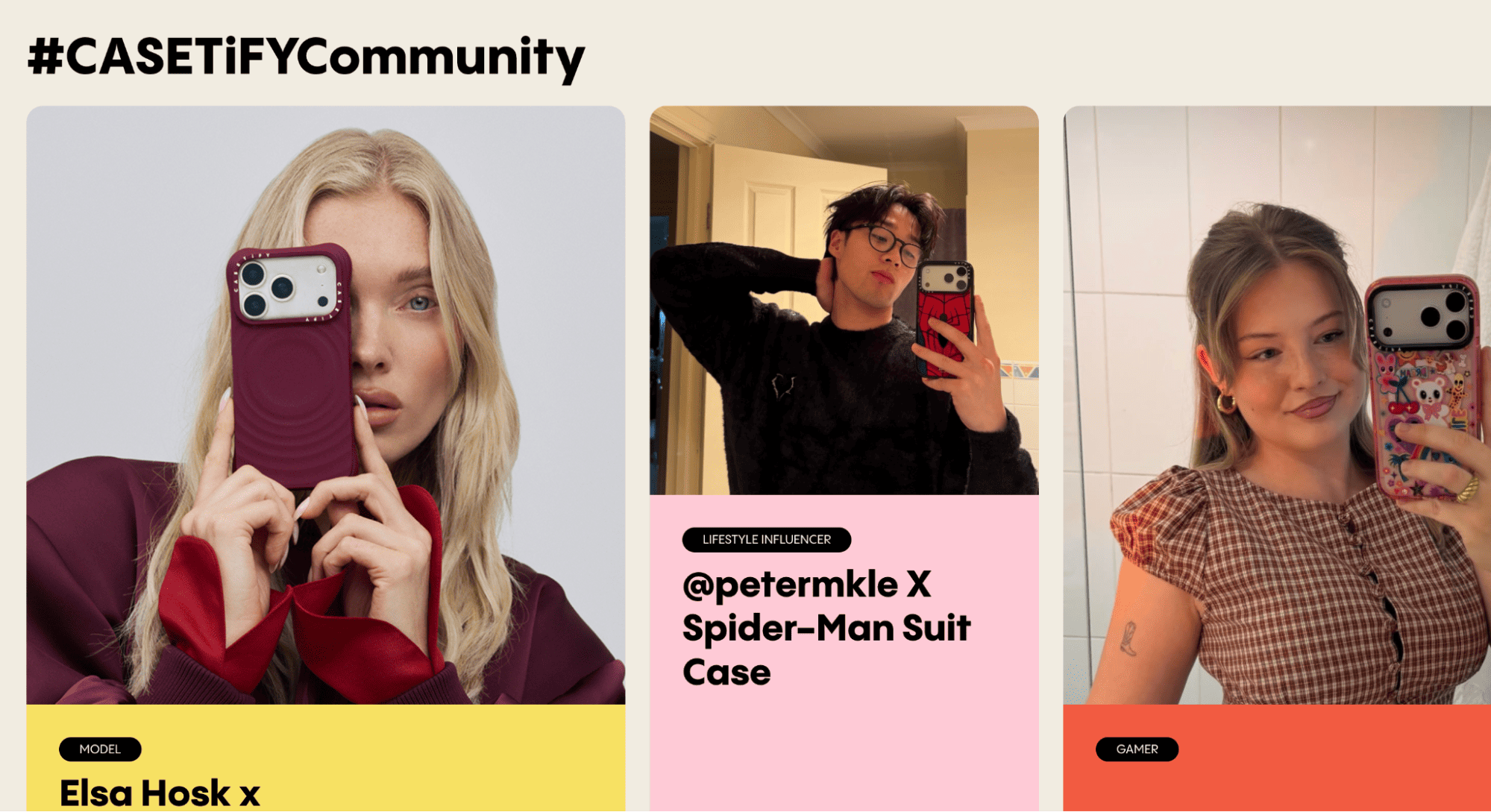
Casetify's #CASETiFYCommunity gallery deliberately mixes named talent with everyday customers and labels each post by role. The labeling is the strategic choice. Without it, every photo would read the same. With it, buyers see that the same product fits a model, a lifestyle creator, and a gamer, which expands who can picture themselves owning it.
Blending aspirational endorsements with relatable customer content addresses two buying triggers at once: desire driven by those who already own the product, and confidence driven by people similar to the buyer.
8. Mailchimp: Review Counts and Third-Party Badges
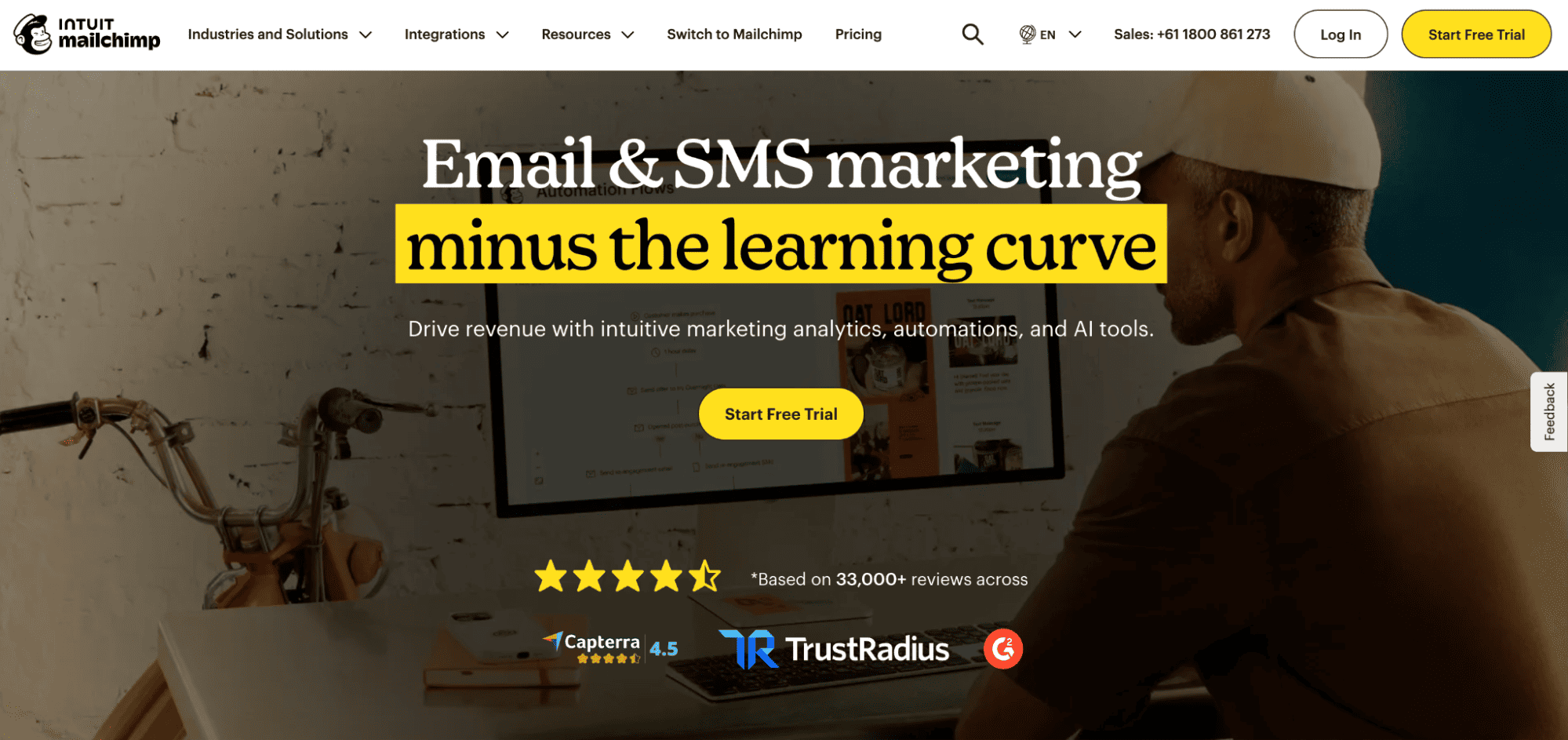
Mailchimp builds trust on its homepage by pointing to external review platforms rather than self-reported testimonials. A combined star rating sits below the hero, supported by review counts and badges from Capterra, TrustRadius, and G2.
This is a textbook example of borrowing credibility from neutral third-party sources. In a crowded SaaS category where every brand claims to be the best, aggregated scores from independent platforms carry more weight than a curated quote from a happy customer. Buyers know G2 and Capterra cannot be edited by the vendor, which makes the score harder to dismiss.
Third-party validation answers the skepticism most B2B buyers bring to vendor websites. It also doubles as SEO and discovery value, since many buyers research on those same platforms before visiting a vendor site.
9. Notion: Logo Strip and Customer Counts

Notion's homepage runs a clean horizontal logo strip featuring brands like OpenAI, Figma, Ramp, Cursor, Vercel, NVIDIA, Volvo, L'Oréal, Discord, Lovable, 1Password, and more. Sitting above the logos is a single line: "Trusted by 98% of the Forbes Cloud 100."
The combination is tactical and powerful. The headline stat tells buyers Notion is the standard in the most respected cloud companies, and the logos prove it visually.
A specific stat plus recognizable logos beats a generic "trusted by leading brands" claim every time. It also helps Notion sell into similar companies because buyers see their peers already on board.
10. Worktop Express: Shoppable UGC and Social Reviews

Worktop Express groups four different types of social proof into a single homepage section, then follows it with hard sales numbers. The mix is deliberate: a Trustpilot score covers third-party reviews, a Price Match Promise covers value, delivery commitments cover service, and a press partnership covers editorial credibility.
This works because no single trust signal answers every buyer's concern. Someone shopping for a kitchen worktop might care most about quality (reviews), price (match promise), or timing (delivery). By layering all four, Worktop Express addresses multiple objections in a single scannable block. The volume numbers underneath then reinforce that this is a high-throughput business, not a small operation.
11. Kylie Cosmetics: Shoppable UGC Videos on the Homepage

Kylie Cosmetics dedicates prime homepage real estate to its Best Sellers, but the section is not built from product photography. Every tile is a short customer or creator video lifted from TikTok and Instagram, with shopping bag icons that take buyers straight to the product page with one tap.
This solves a problem that product photography cannot. Beauty buyers want to see how a blush sits on a real face, how lip swatches read in normal lighting, and how a product moves when someone applies it. Polished studio shoots smooth all of that out. Raw clips from creators keep it in.
It compresses two steps of the buying journey into one. Buyers get the credibility of seeing a real person use the product and the convenience of buying it without leaving the homepage.
12. Temple & Webster: Layered Reviews Across the Buying Journey

Temple & Webster treats reviews as core inventory rather than a footer afterthought. Google Reviews surface on product pages, star ratings sit beside prices on listings, and Trustpilot scores appear at points of hesitation. Placement matters more than volume here. Reviews shown next to the buy button work better than reviews buried deeper.
For furniture, where a sofa might cost $1,200 and the buyer cannot test it in person, verified peer reviews, surfaced at moments of doubt, are often the difference between adding to cart and closing the tab.
How To Add Social Proof Marketing to Your Website
The most useful social proof in marketing examples shares a few habits. They show real people, stay current, and live in the places where buyers make decisions. Here is a practical approach to building your own.
1. Start With the Pages That Drive Decisions
Add social proof on product pages, pricing pages, signup pages, and checkout. These pages carry the most weight in the buying journey, so they get the most lift from reviews and customer content.
2. Mix Formats for Different Buyers
No single format works for everyone. Some buyers want star ratings. Others want long-form case studies. Pair quick visual signals, like star ratings and customer photos, with deeper formats, like testimonials and case studies.
3. Keep It Fresh
Old reviews lose credibility. 90% of consumers say they at least regularly consider how recently the review was written, according to PowerReviews. A steady flow of recent customer content matters more than a one-time push. PowerReviews
4. Make It Visual
Photos and videos outperform plain text. UGC galleries, customer Instagram feeds, and short video testimonials give buyers more to look at and more to trust.
5. Moderate Before You Publish
Public hashtag feeds and customer submissions can pull in spam or off-brand content. Set up moderation rules before a feed goes live, especially on UGC campaigns.
How Flockler Helps You Display Social Proof at Scale
Flockler is a social media aggregation and display platform used by 2,000+ brands and organizations, including GoPro, Harvard University, and IKEA. It brings together content from 10+ platforms into feeds you can embed anywhere.
Here is what makes it a fit for social proof marketing.
Aggregate Reviews, UGC, and Posts From 10+ Platforms
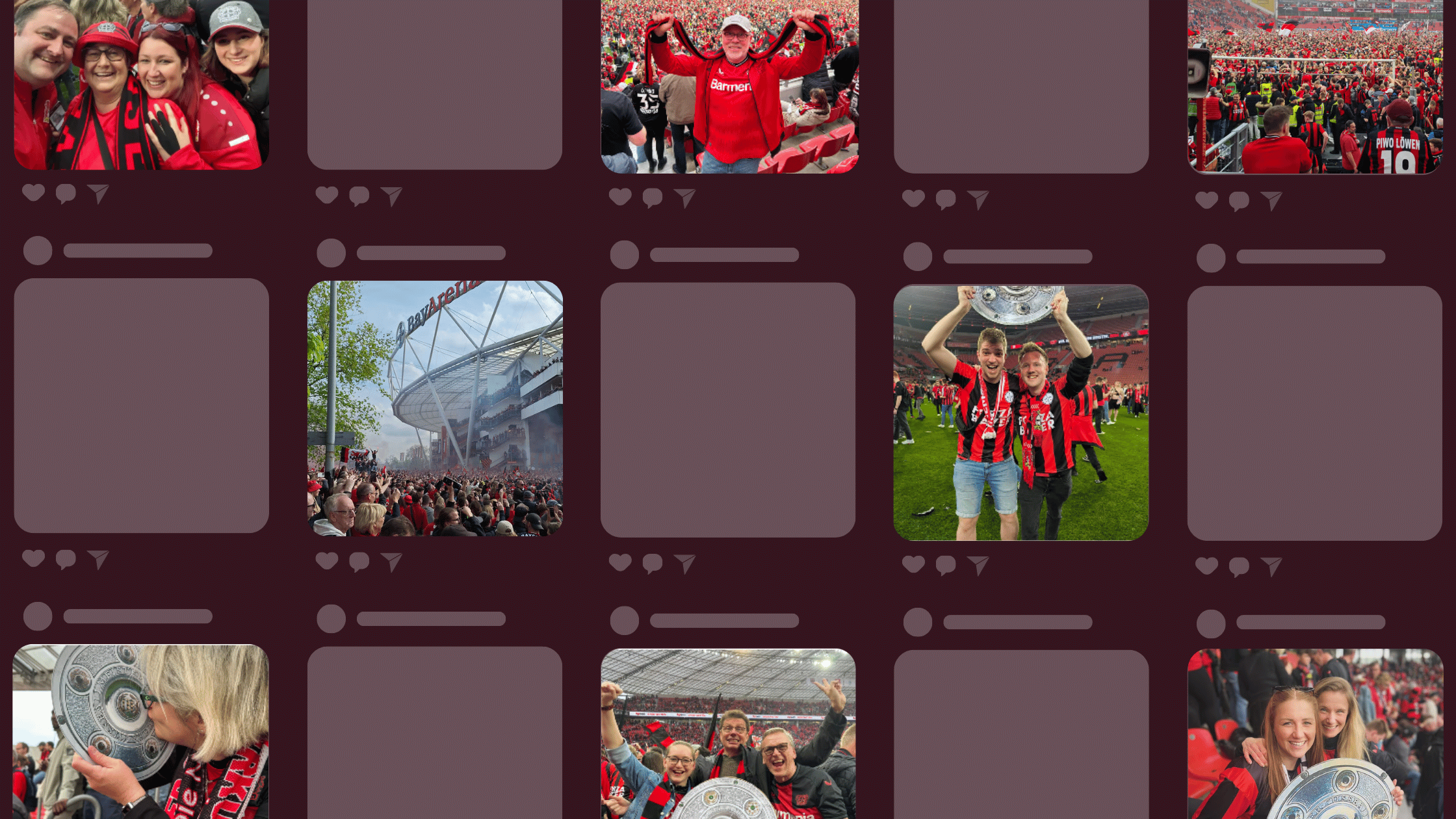
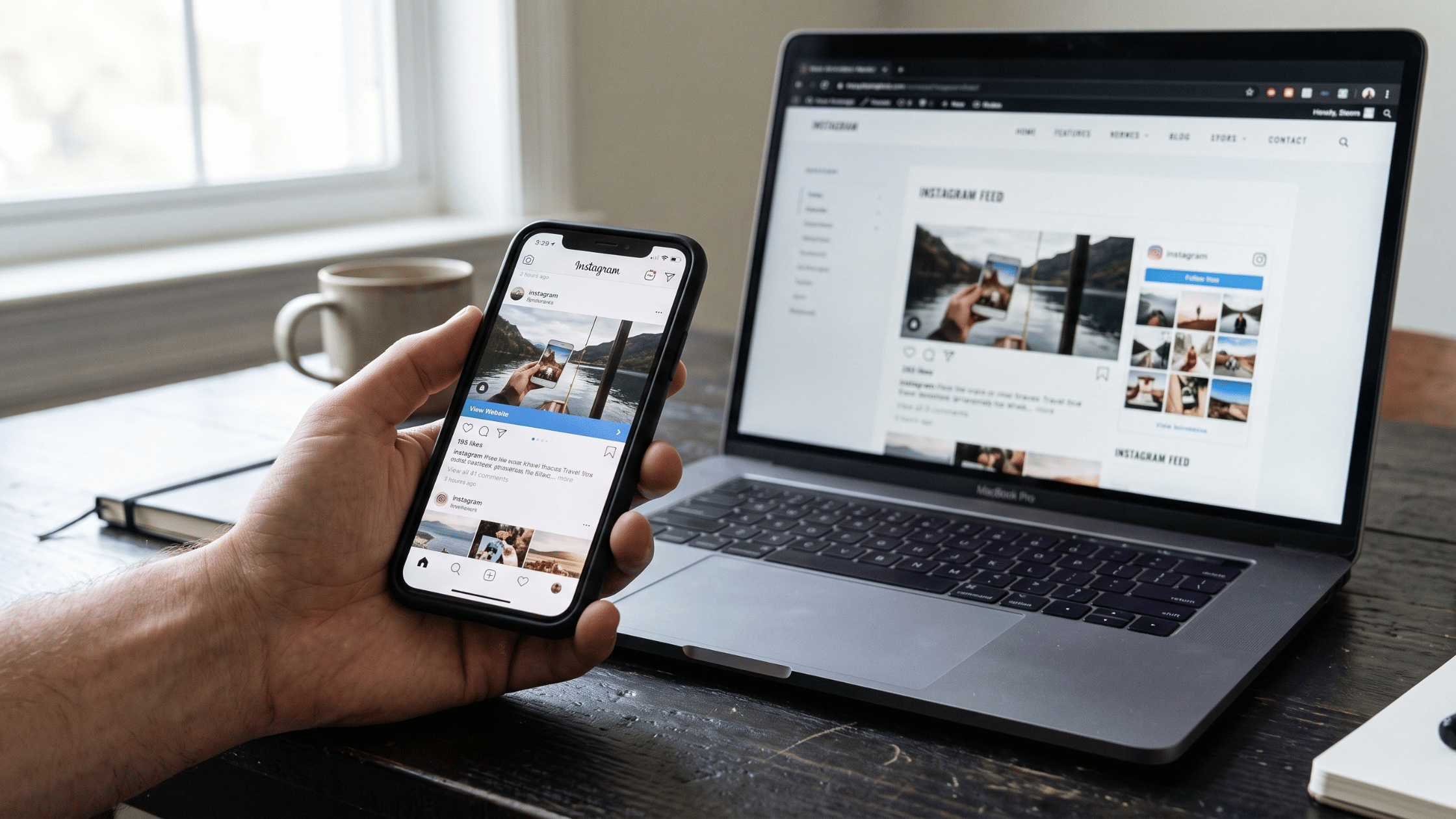
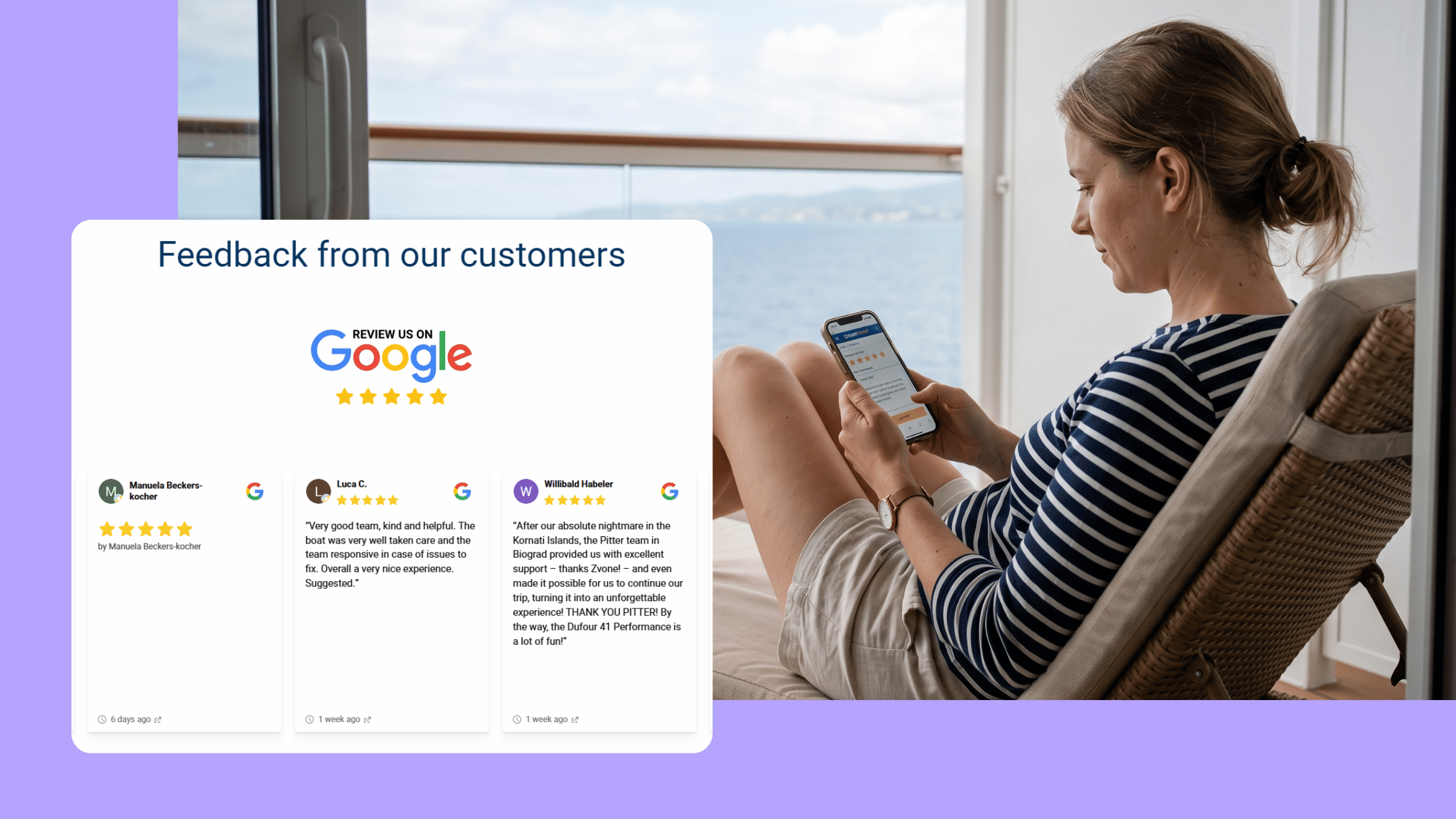
Flockler connects to Instagram, TikTok, LinkedIn, X, YouTube, Facebook, Pinterest, Bluesky, Google Reviews, RSS, and more. You can pull in branded hashtag content, customer reviews, and your own posts into a single feed.
Display Social Proof Anywhere
Embed feeds on websites, Shopify stores, email newsletters, mobile apps, intranets, and digital screens at events. The same source content adapts to each placement.
Built-In Moderation With Garde AI
For Business plans and above, Garde AI automatically reviews incoming content and filters out spam, off-brand posts, and inappropriate material. This keeps your social proof feeds safe to publish without manual review.
Shoppable UGC for E-commerce
Tag UGC posts with product links so visitors can shop directly from a customer photo. This is how retailers like Worktop Express turn social proof into measurable revenue.
Pricing You Can Plan Around
Flockler's standard plans, billed annually, start at $110/month (Basic, 8 feeds), $195/month (Business, 15 feeds), and $325/month (Pro, 30 feeds). The Premium plan is custom and includes access to the Content API for fully custom front-end builds. A 14-day free trial is available with no credit card required.
Conclusion
Social proof marketing works because it answers the question every buyer is already asking: "Do other people like me trust this?" The examples above show that format matters less than source credibility. A real customer photo, a verified review, or a case study with named results does more for your brand than any campaign tagline.
Pick one or two formats that fit your audience and add them to the pages where buyers make decisions. Keep the content fresh, and let real people do most of the talking.
If you want a faster way to collect and display social proof across your website, signup pages, and digital screens, start a 14-day free trial of Flockler and try it on a live page.
FAQs
What Are the Most Common Social Proof Marketing Examples?
The most common examples include customer reviews and star ratings, user-generated content from social media, testimonials and case studies, expert and influencer endorsements, "as seen in" press logos, trust badges, and real-time activity notifications like recent-purchase pop-ups.
What Is the Difference Between Social Proof and a Testimonial?
A testimonial is one type of social proof. Social proof is the broader category and includes reviews, UGC, case studies, expert recommendations, trust badges, and social media activity. A testimonial is usually a single quote from a named customer.
How to Add Social Proof to a Website?
Start by adding star ratings and reviews on product pages, customer logos or testimonials on the homepage, and UGC galleries on landing pages. Tools like Flockler let you collect content from social platforms and Google Reviews and embed it on any page in minutes.
Does Social Proof Marketing Work for B2B?
Yes. B2B buyers rely heavily on case studies, named customer logos, analyst recognition, and review sites like G2 and Capterra. The formats look different from B2C social proof, but the underlying psychology is the same.
What Is the Best Type of Social Proof for E-commerce?
For e-commerce, customer reviews with photos perform consistently well. Shoppable UGC galleries that link photos to product pages take this further by turning inspiration directly into purchases. Real-time activity notifications can also help on product and checkout pages.
A true growth operator with extensive experience across crowdsourcing, affiliate programs, and social media aggregation. Brooke is the CEO if Flockler and cofounder of the marketing agency Northweather and has worked with global brands including LEGO. With international experience spanning SaaS, marketing, and product, she brings sharp expertise in strategy, execution, and driving results through global cross-functional teams.
Une infrastructure sociale qui évolue avec vous.
Commencez votre essai gratuit ou laissez-nous vous montrer la plateforme en action.