June 29, 2026
How to Add a Drupal Social Media Aggregator to Any Page
X minute de lecture

.png)
Une infrastructure sociale qui évolue avec vous.
Commencez votre essai gratuit ou laissez-nous vous montrer la plateforme en action.
If you manage a Drupal site, you already know the awkward part of social content: your Instagram and Facebook posts live somewhere else entirely, and copying them over by hand gets old fast. A Drupal social media aggregator solves that by pulling your latest posts from every channel into a single feed that updates automatically. You set it up once, and it keeps running.
Drupal usually sits under large, content-heavy builds, the kind universities, government agencies, and big brands rely on, where a feed that quietly goes stale gets noticed fast. In this article, you'll see which platforms you can combine, how to embed a feed on a Drupal page or block, and what a live feed actually does for engagement and conversions. None of it needs a developer.
What a Drupal Social Media Aggregator Does
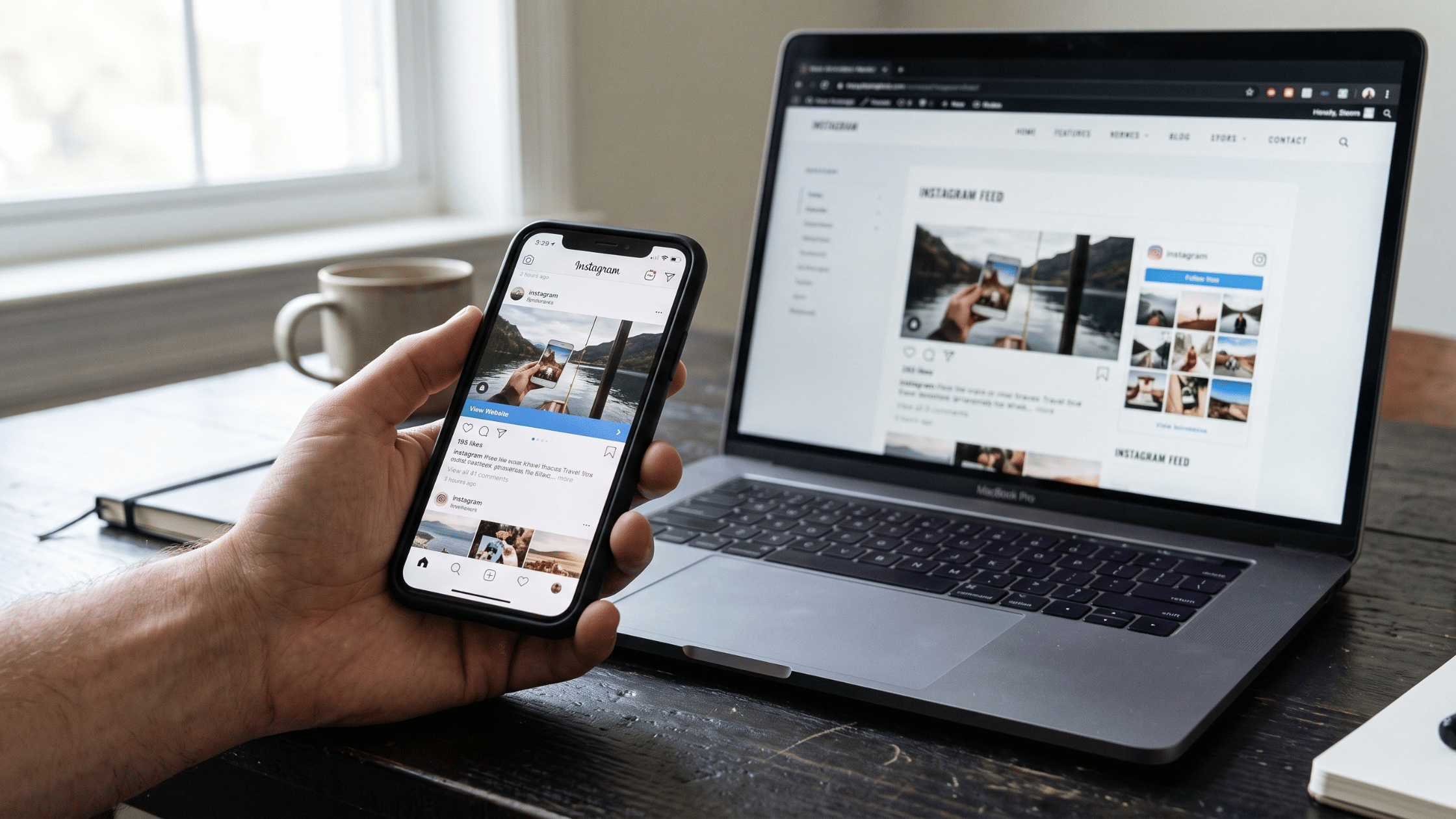
A social media aggregator collects posts from multiple platforms and displays them in a single feed that updates automatically. On Drupal, this keeps your pages fresh without anyone editing the CMS.
Drupal cannot gather social posts on its own. Its core Aggregator module reads RSS and Atom feeds, which are used to syndicate blog posts. It does not pull content from Instagram, TikTok, or other visual platforms. To use a social media aggregator on Drupal, you need a dedicated tool that connects to each platform's API and handles the formatting.
A tool like Flockler does three things. It connects to your accounts, arranges the posts into a branded layout, and gives you a single embed code. You paste that code into Drupal once, and the feed updates every few minutes. When Instagram or X changes its API, Flockler handles the update so your feed keeps working.
Drupal Modules vs. a Hosted Aggregator
Drupal has free contributed modules for social feeds, but most no longer receive support. Knowing the difference helps you avoid a broken setup later.
Modules like the Social Media Aggregator module and Social Feed Aggregator pull from Facebook, Twitter, and Instagram. The problem is maintenance. Several of these projects are marked unsupported or minimally maintained on Drupal.org, and some have no stable release. When a platform changes its API, an abandoned module stops working, and you have to fix it yourself.
A hosted aggregator removes that burden. Here is how the two approaches compare:
- Source coverage: Free modules handle a few older platforms. A hosted tool like Flockler covers 10+ platforms, including TikTok, YouTube, LinkedIn, and Bluesky.
- Maintenance: Modules depend on volunteer upkeep. A hosted tool maintains every platform connection for you.
- Setup: Modules need installation, configuration, and Composer dependencies. A hosted feed needs one embed code.
- Accessibility: Most modules leave alt text to you. Flockler generates it automatically.
For a small personal site, a free module may be enough. For an enterprise Drupal build, the upkeep and limited sources rarely justify the savings.
Which Social Sources Can You Combine Into One Feed?
The value of a Drupal social media aggregator (API or not) depends on how many channels it can pull from. More sources mean a richer feed and less work for your team.
With Flockler, you can build one feed from across 10+ platforms and display them together on Drupal. The most common sources are:
- Instagram: Business account posts, hashtag campaigns, mentions, and 24-hour Stories. Hashtag feeds, mentions, and Stories require an Instagram Business account connected through Facebook.
- Facebook: Public Page posts, mentions, reviews, and recommendations.
- X (formerly Twitter): Public posts by keyword, hashtag, or username.
- TikTok and YouTube: Account feeds and channel content, plus manual curation of public videos.
- LinkedIn, Bluesky, Pinterest, Google Reviews, and RSS: Company updates, public posts, reviews, and blog feeds in the same display.
You also control how each post reaches the page. Set trusted accounts to auto-publish, route everything through manual review, or let Garde AI filter content across 14 safety categories first. On a Drupal site serving students or a large customer base, this moderation matters.
Most feeds refresh every 5 to 15 minutes. X updates twice per day because of the platform's own limits.
How to Embed Instagram on Drupal With a Live Feed
If you are wondering how to use a social media aggregator on Drupal, the process comes down to three steps. The process is the same whether you embed on a single page or across the entire site.
First, gather some content in Flockler and create a layout. To embed Instagram in Drupal, connect your Instagram Business account via Facebook, then select the posts, hashtags, or mentions you want to show. Adding any other platform follows the same path.
Step 1: Build Your Feed and Choose a Layout
Open the Display tab in Flockler and select a layout. You get four options: Wall, Grid, Carousel, and Slideshow.
Wall, Grid, and Carousel suit websites and pages. A slideshow is built for digital screens at events or in a lobby. After you choose one, Flockler gives you an embed code. Customize the colors, fonts, and CSS first so the feed matches your Drupal theme.
Step 2: Add the Feed to a Drupal Page or Article
You can place the embed code in the body of any article or page.
Open the content editor for a new or existing page. Select the Full HTML text format from the dropdown. Click Source in the toolbar, then paste your Flockler embed code into the body field. Save the page. The feed appears in the content area.
Step 3: Add the Feed to Your Homepage With a Block
For site-wide placement, use Drupal's block system. This lets you show the same feed in a header, sidebar, or footer.
- In Drupal's admin, go to Structure > Block layout and open the Custom block library tab.
- Click + Add custom block. Give it a name like "Flockler widget" and set the text format to Full HTML. Click Source, paste your embed code, and save.
- Then return to Block layout, choose where the feed should appear, such as the Content region, and click Place block.
- Select your custom block, set any visibility rules, and save your changes. Flockler's Drupal help guide shows the same steps with screenshots.
Flockler charges no extra fees for page views or for the number of pages you embed on. The same feed can run across dozens of Drupal pages on a single plan.
Where to Place a Social Feed on Your Drupal Site
The right position for your feed depends on the page and the goal. A homepage feed builds first impressions, while a product-page feed supports a buying decision.
Here are the placements that work best on Drupal:
- Homepage: A Wall or Carousel layout near the top shows your latest activity and sets the tone for the visit. This is the most common placement for brand and institution sites.
- Product or service pages: A Grid of customer photos and reviews adds social proof at the point of decision. Retailers see the strongest conversion lift here.
- News or events sections: A live feed of hashtag posts keeps these pages current during a campaign, launch, or event without manual updates.
- Sidebar or footer: A Carousel in a narrow column shows recent posts without taking over the page. Drupal's block system makes this placement straightforward.
- Digital screens: A Slideshow layout suits lobby displays and event screens. The feed rotates the latest posts and refreshes automatically.
You can run different layouts on different pages within a single Flockler plan. There is no extra cost based on the number of embeds, so a single subscription covers your entire Drupal site.
Why a Live Social Feed Lifts Engagement and Conversions
A live feed gives visitors a reason to stay on the page and explore. That difference shows up in the numbers.
User-generated content drives much of this. Pages featuring UGC drove 6.73x higher conversions for brands in the first quarter of 2026, and visits to those pages ran 4.11x higher than visits to pages without it. When visitors see real customers, they trust the brand more.
Here is what a Drupal social media aggregator delivers in practice:
- It adds social proof where buyers decide: Customer photos, reviews, and tagged posts sit next to a product or signup form. Around 79% of people say UGC strongly influences what they buy.
- It increases time on site: A self-refreshing feed keeps homepages and product pages from looking static. Visitors scroll, click into your profiles, and stay longer.
- It grows your social reach: Each embedded feed sends website traffic back to your channels, which builds followers and organic reach.
- It removes duplicate work: Your social team creates content once, and the aggregator automatically pushes it to Drupal.
How Organizations Use Aggregators on Enterprise Drupal Sites
Large institutions operate many sites and need consistency across all teams. A central aggregator makes that possible.
George Washington University shows how this works at scale. GW runs its schools and departments on Drupal, hosted through Acquia. The university provides Flockler as a central, supported tool to teams across campus, so individual departments add social feeds to their Drupal sites without sourcing their own software.
The scale explains why this matters. GW runs eight X accounts for the central organization alone, and most of its schools add their own accounts and hashtags too. One shared aggregator lets each team pull the right content onto the right page. The Women's Leadership Program, for example, runs a carousel on its program page that mixes posts from the program with posts from participating students.
The same logic applies beyond universities. When a central team provides one supported aggregator, departments stop building separate fixes. Feeds stay on brand, and content updates on its own without extra staff work.
Choosing the Right Aggregator for Your Drupal Build
The right tool depends on your scale, your moderation needs, and how much design control you want. A few factors are worth checking before you commit.
- Platform coverage: Confirm the tool supports every channel you post on, including newer ones like TikTok and Bluesky.
- Accessibility: On government, education, and large enterprise Drupal sites, automated alt text and WCAG-aligned output are requirements.
- Moderation: Social content moderation with AI filtering, manual review, and keyword blocking keeps off-brand posts from appearing on your pages.
- Pricing model: Avoid tools that charge by page views. Flat-rate plans let you embed widely without watching a counter.
Flockler's Basic plan starts at $129 per month on a monthly billing. It includes 8 feeds, unlimited layouts, unlimited page views, and unlimited users. The Business and Pro tiers add Garde AI moderation and automated alt text. Developers who want full control can use the Content API to build custom layouts and create feeds programmatically, though API access requires a Premium or Agency plan. The current tiers are listed on the pricing page.
A 14-day free trial includes the full product with no credit card. You can test a live feed on a staging Drupal site before you decide.
FAQs
What Is a Drupal Social Media Aggregator?
It is a tool that collects posts from platforms like Instagram, Facebook, and X and displays them as a single auto-updating feed on a Drupal site. Drupal's core Aggregator module reads RSS feeds only, so visual social content needs a dedicated aggregator that connects to each platform's API.
Do You Need Coding Skills to Add a Feed to Drupal?
No. You connect your accounts in Flockler, pick a layout, and copy an embed code. That code can go into a Drupal page in the Full HTML format or into a custom block for site-wide placement. Standard layouts need no development work.
Can You Embed Instagram on Drupal Without a Business Account?
You can display your own account's posts with an email and password connection. To embed Instagram in Drupal with hashtag feeds, mentions, or Stories, you need an Instagram Business account connected through Facebook, and the Facebook profile must be a Page admin.
How Often Does the Feed Update on a Drupal Page?
Most feeds refresh automatically every 5 to 15 minutes. X updates twice per day because of platform limits. Nobody needs to log into Drupal to keep the content current.
Does Adding More Feeds Slow Down a Drupal Site?
The embed code loads asynchronously, so it does not block the rest of your page from rendering. Flockler hosts the feed content and serves it through a CDN, which keeps the effect on your Drupal load time short, even with several feeds.
Maria Prakkat is a SaaS content marketing and SEO strategist with experience across SEO, GEO, and social media aggregation. She writes in-depth, research-backed content that helps businesses understand and apply solutions like social media aggregators, UGC platforms, and content distribution tools to improve visibility and engagement. Her work focuses on clarity, relevance, and long-term impact.
Une infrastructure sociale qui évolue avec vous.
Commencez votre essai gratuit ou laissez-nous vous montrer la plateforme en action.