March 3, 2026
Social Media APIs for Developers: Features, Limits, and Tradeoffs
X Minute gelesen


Soziale Infrastruktur, die mit Ihnen skaliert.
Starten Sie Ihre kostenlose Testversion oder lassen Sie sich von uns die Plattform in Aktion zeigen.
Every major social platform offers its own API, including Instagram, TikTok, YouTube, Facebook, LinkedIn, and X. If your project only needs one, integration is usually straightforward. The real challenge begins when you need three, four, or five working together. Each platform has its own authentication flow, data structure, rate limits, and deprecation timelines. Multiply that complexity across platforms, and you are looking at weeks of integration work before you even touch your core product.
That is the exact problem social media APIs are meant to solve, especially aggregator APIs that handle multi-platform complexity through a single endpoint. Below, we break down the best social media APIs for developers (worth knowing), the hidden costs of direct integration, and how Flockler simplifies the content display and management layer.
Types of Social Media APIs
Social media APIs fall into two broad categories. Knowing the difference saves you from picking the wrong tool for your project.
Aggregator and Management APIs
Aggregator APIs connect to multiple social platforms through a single integration. They handle authentication, data normalization, and platform changes behind the scenes. Depending on the provider, they can cover content aggregation, monitoring, display and management or just publishing and scheduling. The key benefit is one integration instead of five or six separate ones.
Native Platform APIs
Native platform APIs are provided directly by each social network, such as the Instagram Graph API, YouTube Data API, and X API. They provide the deepest access to platform-specific features such as ad management, account analytics, and content publishing. But each one requires its own authentication setup, rate-limiting, and ongoing maintenance.
Common Use Cases for Social Media APIs

The type of API you choose depends on what you are building. Here are the most common use cases developers work on:
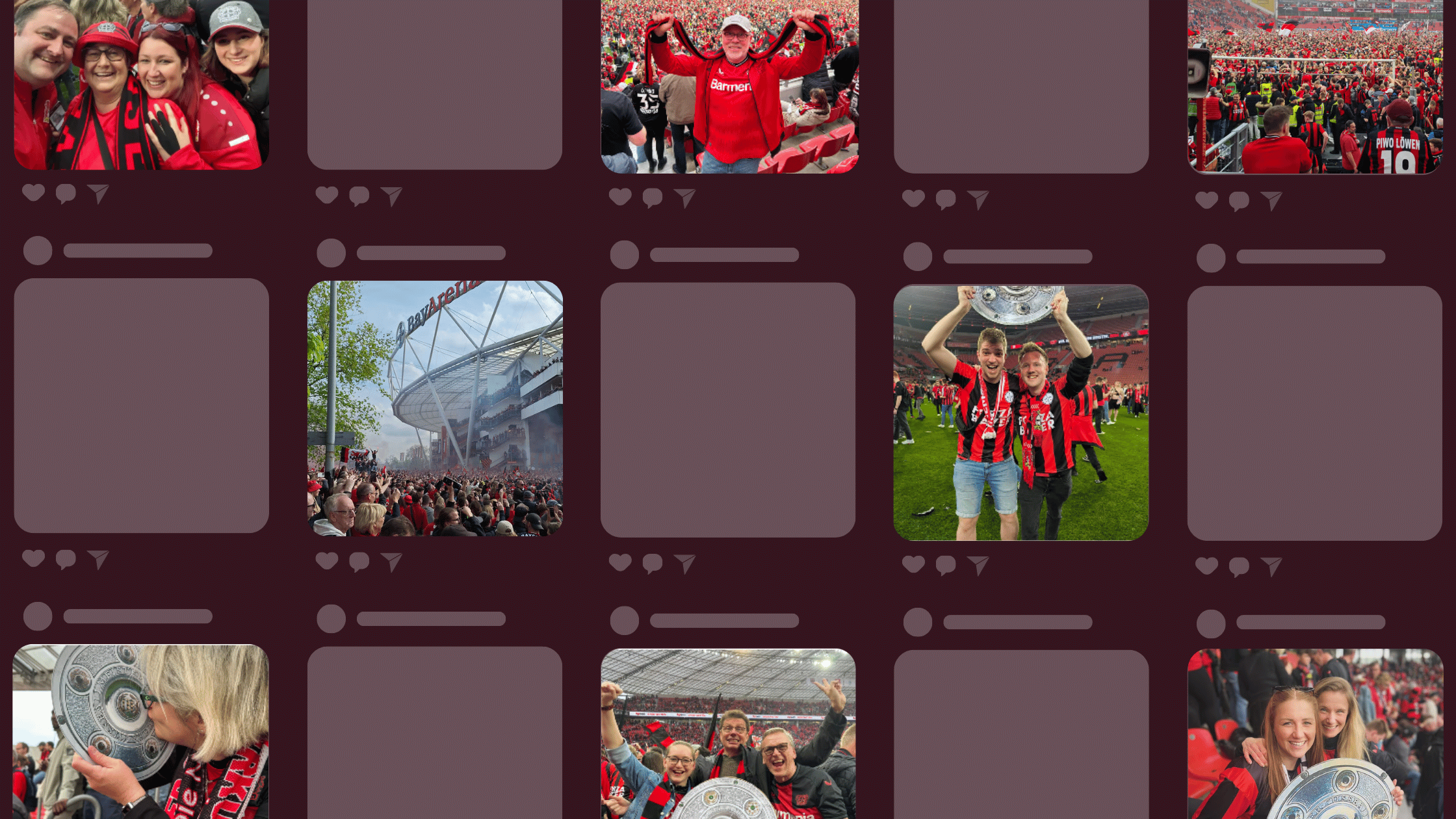
- UGC galleries on e-commerce sites: Pulling customer photos and videos from Instagram, TikTok, or hashtag campaigns and displaying them on product pages. This adds social proof and drives conversions. A content aggregation API like Flockler handles the collection, moderation, and display.
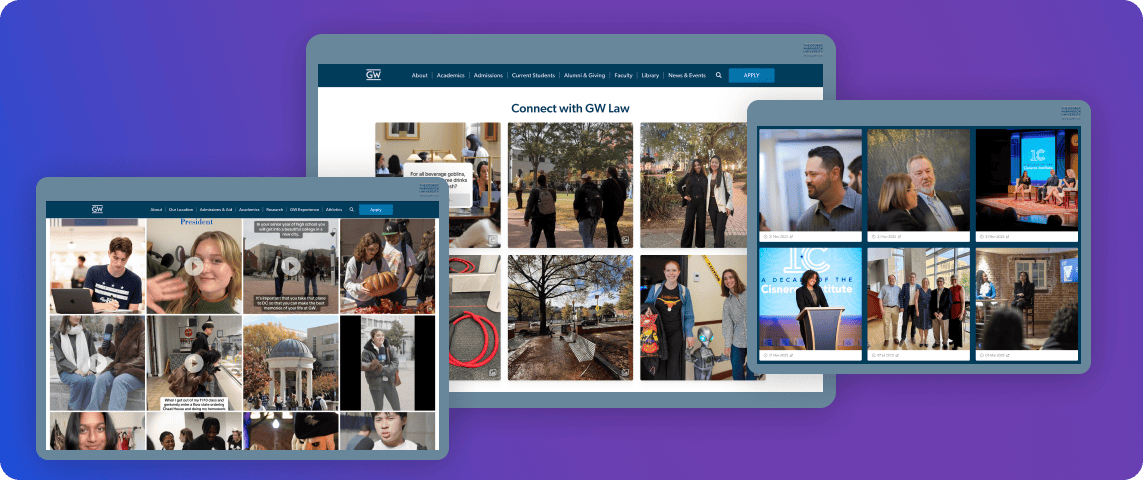
- Social walls for events and conferences: Live displays showing real-time social posts from event hashtags. These need fast refresh rates, content moderation, and multi-platform support. Flockler supports auto-updating feeds every few minutes.
- Digital signage in retail, campuses, or offices: Showing curated social content on lobby screens, campus displays, or in-store monitors. The content needs to be brand-safe and automatically updated.
- Intranet and internal communication feeds: Embedding social feeds into platforms like SharePoint or Confluence to keep internal communications fresh and visible.
- Social media management tools: Building dashboards that let users schedule posts, track analytics, and manage comments across platforms. This typically requires publishing APIs and native platform APIs for deeper access.
- Social listening and analytics dashboards: Tracking feed engagement trends across networks. Data retrieval APIs are the standard choice here.
Where Native Social Media APIs Get Complicated

One API is manageable. The costs start compounding when you stack three or more. Here is what typically consumes the most engineering time:
- Authentication overhead: Each platform uses its own OAuth flow, token lifetime, and refresh mechanism. Instagram and Facebook share Meta’s authentication system, while YouTube uses Google OAuth. X and LinkedIn each require separate authentication flows. You end up building multiple auth pipelines, each with its own failure modes.
- Data normalization: Every platform returns data differently. An Instagram post object looks nothing like a YouTube video or a tweet. Showing content from multiple sources in a single layout requires writing and maintaining normalization logic for each source.
- Rate limit management: Instagram caps you at 200 requests per hour. YouTube gives you 10,000 quota units per day. X ties your pricing tier to limits. Exceed any of these limits, and you risk temporary access restrictions.
- Deprecated versions: Meta regularly deprecates API versions and metrics. X overhauled its entire pricing model in 2023. YouTube adjusts quota costs over time. Every change means code updates, testing, and redeployment.
- Approval delays: Full API access from Meta requires a developer app, detailed permission requests, and a review that can take weeks. TikTok and LinkedIn follow similar patterns. These delays can significantly push project timelines back.
For teams where content display is one feature among many, spending months on API maintenance is a poor use of resources.
Best Social Media APIs for Developers In 2026
Now that you know where the complexity is, here is a breakdown of the best social media APIs worth evaluating. We have covered aggregator APIs first since they solve the multi-platform problem directly, followed by native platform APIs for deeper, platform-specific use cases.
Aggregator APIs
Aggregator APIs sit between your application and individual social platforms. One integration. One auth method. One data format. The aggregator handles platform-specific changes behind the scenes.
1. Flockler Content API
Best for: Developers building social content displays on websites, apps, digital screens, or intranets.
Flockler provides a RESTful Content API for fetching curated social content and building custom layouts.
- Platform coverage: Instagram, Facebook, X, TikTok, YouTube, LinkedIn, Pinterest, Bluesky, Google Reviews, RSS feeds, Flickr, SoundCloud, and custom upload forms. All content returns in a consistent JSON format.
- Programmatic feed creation: POST endpoints for creating feeds via API. Currently supports Instagram, Facebook, X, Pinterest, and RSS. LinkedIn and YouTube feeds are created through the dashboard and accessed through the API.
- Built-in moderation: Manual review, automated keyword/user filters, and Garde AI for automatic brand-safety filtering. Content is organized into sections and tags for granular filtering.
- Authentication: API key + site UUID. No OAuth complexity. No token refresh logic is needed either.
- Pre-built layouts: Wall, Grid, Carousel, and Slideshow layouts that embed with a code snippet. Customize with CSS. Move to the full API when you need complete control.
- Pricing: Starts at $129/month with unlimited page layouts, views, and users. The Content API is available on Premium and Agency plans, which have custom quotes. A 14-day free trial is available with no credit card required. The API feature is not included during the trial period.
Why it stands out: Flockler handles all platform integrations, token management, and data normalization. You get clean, moderated content from 13+ social platforms through a single endpoint. Authentication takes only minutes. For teams focused on displaying social content rather than building platform integrations from scratch, Flockler removes the heaviest parts of the job.
Read this social media aggregator API guide for a full breakdown of how it collects, manages, and displays social content.
2. Ayrshare
Best for: Developers building social media publishing and scheduling tools.

- Focus: Multi-platform posting, scheduling, and analytics via API.
- Platforms: Facebook, Instagram, LinkedIn, X, TikTok, YouTube, Pinterest, Reddit, Telegram, and Google Business Profile.
- Pricing: Starts at around $149 per month for the individual plan. A 14-day free trial is available, along with an enterprise plan for custom requirements.
- Strengths: Developer-friendly REST API. Multiple SDKs.
Key limitation: Primarily a publishing API. Less suited for content aggregation and display use cases.
3. Data365
Best for: Developers building social listening, monitoring, or analytics applications.

- Focus: Data retrieval and monitoring across multiple social networks.
- Platforms: Facebook, Instagram, X, TikTok, Reddit, Threads, and more.
- Pricing: Starts at €300/month (Basic, 500,000 credits, one network). Standard at €850/month (1M credits, two networks). Premium with custom pricing. 14-day free trial available.
- Strengths: Real-time data. Unified data format across platforms. 99.9% uptime. Strong documentation and Postman playgrounds.
Key limitation: Focused on data extraction and analysis. Not designed for content display or feed embedding.
Native Platform APIs
Native APIs are provided directly by each social platform. They offer the deepest access to platform-specific data and functionality. Use these when you need capabilities only the official API provides.
4. Instagram Graph API
Best for: Apps that need to publish content, pull engagement metrics, or search hashtags on Instagram.
- Authentication: OAuth 2.0 through Instagram Business Login or Facebook Meta frequently updates and deprecates Insights metrics across API versions, including video_views for non-Reels content, profile_views, and website_clicks. Frequent version updates mean ongoing code maintenance.
5. Facebook Graph API
Best for: Page management, ad campaigns, audience insights, and group content.
- Current version: v22.0 (2025). Meta releases new versions regularly, typically with deprecation windows.
- Authentication: Same Meta OAuth system as Instagram.
- App review: Required for most permissions. Can take weeks to months.
- Breaking changes: API versions are deprecated regularly with roughly 90 days' notice.
Key limitation: Permissions review, token management, and deprecation cycles create overhead that never fully goes away.
6. X (Twitter) API v2
Best for: Tweet posting, real-time streaming, and sentiment analysis at scale.
- Free tier: Write-only. 1,500 tweets/month. No read access.
- Basic plan: $200/month for 15,000 tweet reads.
- Pro plan: $5,000/month for 1 million reads.
- Enterprise: $42,000+/month with custom contracts.
Key limitation: No intermediate option between Basic ($200) and Pro ($5,000). That 25x price jump puts many small- to mid-size projects out of reach. A pay-per-use credit system is in closed beta as of late 2025.
7. YouTube Data API
Best for: Video metadata, uploads, playlist management, and channel analytics.
- Pricing: Free, but quota-limited.
- Default quota: 10,000 units/day per Google Cloud project.
- Unit costs: List request = 1 unit. Search = 100 units. Video upload = 1,600 units.
- Authentication: OAuth 2.0 through Google Cloud.
Key limitation: Exceeding the default quota requires a compliance audit and business justification from Google. Heavy or commercial usage needs careful planning upfront.
8. TikTok API
Best for: Video content posting, data retrieval, and engagement tracking.
- Access: Tiered by use case. Higher tiers require longer approval.
- Policies: Strict rules on content and data use. Active compliance enforcement.
- Maturity: Less mature than Meta or Google APIs. Fewer community resources.
Key limitation: Approval for production-level access can be slow and unpredictable. Documentation is still catching up.
9. LinkedIn API
Best for: Company page automation, B2B publishing, and ad campaign management.
- Access: Restricted to approved applications. Selective and often slow.
- Scope: Mostly limited to company page management. Personal profile access is heavily restricted.
Key limitation: Very narrow scope. Limited usefulness for general content aggregation or social display projects.
Native APIs vs. Aggregator APIs: When to Use Which
If you’re confused between which one to pick, here’s what you need to know:
If your project needs to publish posts, manage ad campaigns, or run analytics on owned accounts, native APIs are the standard route. But they come with the overhead covered earlier in this article: separate auth flows, token management, rate limits, and ongoing maintenance for each platform.
If your project focuses on displaying or curating social content across platforms, an aggregator API like Flockler is the faster, more sustainable option. This includes UGC galleries on product pages, social walls at events, and content feeds on intranets or digital signage. In these cases, building and maintaining five separate native integrations adds cost without delivering meaningful additional value.
Flockler handles the platform connections, data normalization, and content moderation so your team can focus on the frontend experience. One integration replaces what would otherwise take weeks of setup and months of maintenance across multiple APIs.
How to Evaluate a Social Media API
Before committing to any of the best social media APIs for developers out there, run them through these checks:
- Platform coverage: Does it support all the networks your project needs? Check for relevant social media platforms where your brand is present.
- Data consistency: Pulling from multiple platforms? A unified data structure saves serious frontend work.
- Rate limits and scalability: Know the limits and how they scale. Some charge per request. Others bundle unlimited calls into a plan.
- Authentication complexity: How much setup and token management is involved? Simpler authentication reduces the risk of production failures.
- Moderation capabilities: Displaying public content? Check if moderation is built-in or something you build yourself.
- Documentation and developer experience: Working code examples, clear endpoint references, and responsive support are essential. Test before committing.
- Pricing model: Per-request, per-seat, or per-feature tier? Match it to your usage so costs stay predictable.
FAQs
What Is the Difference Between a Native Social Media API and an Aggregator API?
A native API is built directly into the platform. It gives access to that specific platform's data and features. An aggregator API connects to multiple platforms via a single interface. It normalizes data and manages platform-specific complexity behind the scenes. Native APIs give deeper control. Aggregator APIs cut integration and maintenance overhead.
Do I Need Coding Skills to Use Flockler?
No. Flockler provides ready-made embed layouts that work with a simple embed code. No programming is needed. The Content API is for developers who want fully custom solutions. Available on Premium and Agency plans.
How Does Flockler Handle Content Moderation?
Flockler uses three layers of moderation: manual approval, automated keyword and user-based filtering, and Garde AI for removing irrelevant or brand-unsafe content.
Which Platforms Does Flockler's API Support?
Instagram, Facebook, X (Twitter), TikTok, YouTube, LinkedIn, Pinterest, Google Reviews, RSS feeds, and custom content through upload forms. All content is returned in a unified JSON format via a single endpoint.
Can I Create Feeds Programmatically With Flockler's API?
Yes. post endpoints support feed creation for Instagram, Facebook, X, Pinterest, and RSS. For LinkedIn and YouTube, create feeds in the Flockler dashboard and access content through the API.
A true growth operator with extensive experience across crowdsourcing, affiliate programs, and social media aggregation. Brooke is the CEO if Flockler and cofounder of the marketing agency Northweather and has worked with global brands including LEGO. With international experience spanning SaaS, marketing, and product, she brings sharp expertise in strategy, execution, and driving results through global cross-functional teams.
Soziale Infrastruktur, die mit Ihnen skaliert.
Starten Sie Ihre kostenlose Testversion oder lassen Sie sich von uns die Plattform in Aktion zeigen.