March 3, 2026
Social Media Scraping API vs. Aggregator API: Which One Do You Actually Need?
X Minute gelesen


Soziale Infrastruktur, die mit Ihnen skaliert.
Starten Sie Ihre kostenlose Testversion oder lassen Sie sich von uns die Plattform in Aktion zeigen.
If you are searching for a social media scraping API, you are likely trying to solve one of two very different problems:
- You may need raw social media data for research, analytics, or lead generation.
- Or wants to display social media posts on your website, app, or digital screen.
These are fundamentally different goals, and they require different tools.
If your goal is to embed social content on a website or power a live social wall, scraping is the wrong tool for the job. What you actually need is a social media aggregation API, which collects, moderates, and delivers social posts through official platform channels.
In this blog post, we will explain what social media scraping APIs actually do, who uses them, and the risks they carry. Then we will walk through how a social media aggregation API works and why it is the better choice for anyone looking to embed social posts on their digital properties.
Social Media Scraping API vs. Aggregator API: What Is the Difference?
These two types of APIs sound similar, but they solve very different problems. Understanding the distinction will save you time, money, and potential legal headaches.
What Is a Social Media Scraping API?

A social media scraping API is a service that extracts public data from social media platforms using automated methods. It sends bots or headless browsers to visit social media pages, read the HTML or internal data structures, and return the information as structured data (usually JSON).
Here is what a typical scraping API can extract:
- Profile data: Usernames, bios, follower counts, profile images, and account metadata.
- Post content: Captions, images, videos, timestamps, and engagement metrics like likes, comments, and shares.
- Comments and replies: Text, author information, and engagement on individual posts.
- Hashtag data: Posts associated with a specific hashtag across a platform.
- Search results: Posts or profiles matching a keyword or query.
Scraping APIs handle the technical complexity of data extraction for you. They manage proxy rotation, often working with ISP proxy providers, browser fingerprinting, CAPTCHA solving, and request throttling so your requests look like normal user activity to the platform. Providers like Apify, Scrape.do, and Bright Data offer these services with credit-based or subscription pricing models.
The key thing to understand is that scraping APIs are designed for raw data collection. They give you data to analyze, store, or process.
What Is a Social Media Aggregator API?
A social media aggregator API connects to platforms through their official, authorized APIs. It collects posts from multiple social channels, stores them in a unified format, and delivers them in a display-ready format for websites, apps, digital screens, and other digital surfaces.
Here is what an aggregator API usually provides:
- Multi-platform content collection: Posts, images, videos, and stories from Instagram, TikTok, X, YouTube, LinkedIn, Facebook, Pinterest, and more through a single endpoint.
- Content moderation: Manual approval workflows or automated filters, and AI-powered moderation to keep feeds brand-safe.
- Display-ready output: Structured JSON with consistent formatting across all platforms or ready-made layouts.
- Compliance and rights management: GDPR-compliant data handling, UGC rights tools, and support for accessibility standards such as WCAG and EAA.
- Automatic platform updates: When Instagram, Meta, or X changes their API, the aggregator provider updates the integration. Your code stays the same.
The aggregator acts as an abstraction layer between your website and the social media platforms. You connect your sources once, and the API handles authentication, token management, rate limits, and data formatting on your behalf.
Here’s a quick comparison of both solutions:
In short, if you need follower counts, engagement metrics, or large datasets for analysis, a scraping API may be a good fit for your use case, with the legal caveats covered later in this article. If you need to show social posts on a website, app, or screen, an aggregator API is the right tool.
The Risks of Social Media Scraping in 2026
Even for legitimate data use cases, scraping carries growing risks. Here is what you need to know.
Legal Uncertainty Is Increasing
The legal status of social media scraping is becoming more complex.
In late 2025, Reddit filed a lawsuit against SerpApi, Oxylabs, AWMProxy, and Perplexity AI for scraping Reddit content through Google search results. Google also sued SerpApi for circumventing its SearchGuard anti-scraping system.
These lawsuits signal that platforms are moving beyond simple terms-of-service enforcement. They are using intellectual property law to directly challenge scrapers.
Platforms Are Investing in Anti-Scraping Defenses
Social media platforms are spending heavily to detect and block scrapers. Instagram uses TLS fingerprinting and reduced its API rate limits. Meta deprecated the Basic Display API in December 2024, cutting off access to personal account data entirely. Google deployed SearchGuard in January 2025, a JavaScript challenge system that blocks automated queries. X (formerly Twitter) updates its defenses every two to four weeks, requiring scraping providers to constantly adapt.
When a platform updates its defenses, scraping APIs can break without warning. If your product or website depends on scraped data, downtime is not a question of "if" but "when."
Maintenance and Data Quality Issues
Scraping providers must continuously update their tools to keep pace with platform changes. If your provider falls behind or you are maintaining your own scraper, expect regular breakages. Scraped data also arrives with inconsistent formatting, missing fields, and expired media URLs across platforms. Cleaning and normalizing this data takes ongoing engineering effort.
How Flockler's Social Media Aggregation API Works

If your goal is to display social content on digital platforms, you need a social media aggregator. Whether you want to show Instagram, TikTok, or YouTube posts on a website, build a live social wall for an event, or display customer reviews on product pages, an aggregator makes it possible. A social media feed widget and aggregator solution lets you bring content from multiple platforms into one feed.
Flockler integrates with 13+ platforms via official API partnerships. It handles authentication, data collection, moderation, and delivery so you can focus on building your product or running your campaign.
Here is how the Flockler Content API works for developers.
- One endpoint, multiple platforms: Flockler's Content API lets you fetch posts from Instagram, Facebook, X, YouTube, LinkedIn, TikTok, Pinterest, Bluesky, Google Reviews, and RSS feeds through a single integration. You get structured JSON with consistent formatting across all sources.
- Simple authentication: Generate an API key in your Flockler settings, add it to your request headers, and start fetching content.
- Programmatic feed management: Create and configure feeds for Instagram, Facebook, X, Pinterest, and RSS sources directly through the API. The bulk feed creation feature lets enterprise teams launch 100+ feeds, which is useful for agencies and multi-brand organizations.
- Built-in moderation: Flockler includes manual, automated, and AI-powered moderation through Garde AI. It filters inappropriate or off-brand content before it reaches your website. Scraping APIs offer no moderation.
- Platform changes are handled: When Instagram updates its Graph API or Meta deprecates an endpoint, Flockler's team updates the integration. Your code does not have to change.
Flockler also offers a no-code option. Developers who want full control use the Content API. Teams that do not need custom code can use Flockler's ready-made embed layouts (Wall, Grid, Carousel, Slideshow) with a simple copy-paste embed code. Both approaches work from the same data source.
The Content API is available on Premium and Agency plans. You can test the platform with the 14-day free trial, with no credit card required. You can explore the full API documentation here.
Benefits of a Social Media Aggregation API vs. Scraping APIs
Here are some of the benefits of using Flockler for your social media feeds:
- Reliability: Flockler maintains all platform integrations. When Instagram, TikTok, or LinkedIn changes something, Flockler's infrastructure adapts automatically. Your integration keeps working.
- Speed to launch: You can go from signup to a live social feed on your website in just five minutes using ready-made embed layouts. For custom builds, the API documentation includes code examples to help developers ship quickly.
- Content control: Garde AI automatically filters out irrelevant and inappropriate content. You can also set up manual approval workflows for full editorial control over what appears on your site.
- No page view limits: Your feeds can receive unlimited traffic. Flockler pricing is based on the number of automated feeds (sources), not on views, impressions, or domains.
- GDPR and accessibility built in: Flockler handles data protection compliance and provides AI-generated alt text to meet WCAG and EAA accessibility standards.
What Can You Embed Using Flockler’s Social Media API?
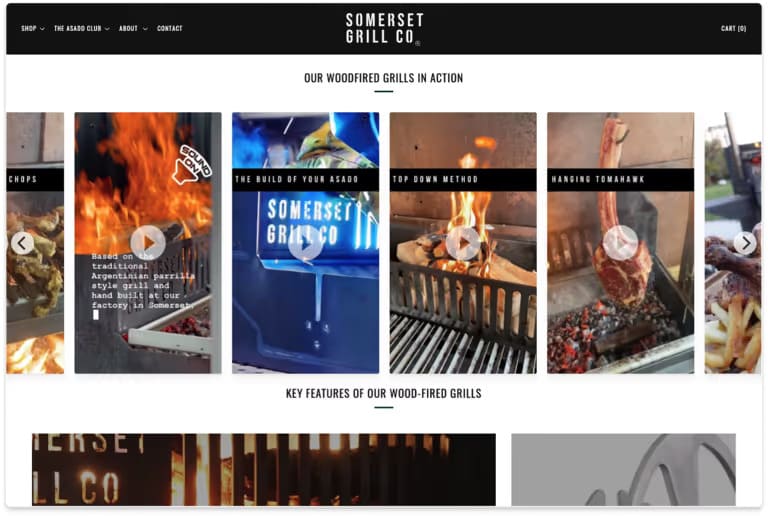
Flockler supports a wide range of content display scenarios across any digital surface:
- Product pages: Shoppable UGC galleries with product tagging to drive conversions.
- Homepages/websites: Live social proof feeds featuring customer photos, reviews, and brand mentions on websites. Brands such as GoPro and Harvard University use this approach.
- Events: Real-time hashtag walls at conferences, award shows, and campus events with 5 to 15 minute refresh rates.
- Digital signage: Social feeds on retail screens, office lobbies, and campus buildings. One plan covers all surfaces.
- Intranets: Employee content on SharePoint or internal portals.
- Custom integrations: Full API access to build any display experience with your own frontend.
See the full list of supported platforms and content types here.
To Sum Up
Choosing between a social media scraping API and an aggregation API depends on what you plan to do with the data.
If you are building dashboards or running research, scraping may serve that need. If visitors to your website, event screen, or app need to see live social content, an aggregation API will get you there faster, with fewer risks and far less maintenance.
Flockler’s free trial gives you full access to embed layouts so you can test how social feeds look on your site before you commit. The Content API is available only on paid plans for teams that need custom integrations.
Try Flockler free for 14 days and see how it works for your use case.
FAQs
What Is a Social Media Scraping API Used For?
A social media scraping API extracts public data from platforms like Instagram, TikTok, X, and LinkedIn. Businesses use it for market research, competitor monitoring, sentiment analysis, influencer discovery, and lead generation. It is a data-collection tool, not a content-display tool. If you want to embed social posts on a website, you need an aggregation API instead.
Is Social Media Scraping Legal?
The legality depends on the method, the data, and the jurisdiction. Scraping public data is generally permitted. Using official API channels or authorized tools is the safest approach for commercial use.
What Is the Difference Between a Scraping API and a Social Media Aggregation API?
A scraping API extracts raw data from platforms by bypassing official channels. An aggregation API connects to platforms through authorized APIs to collect, moderate, and deliver content for display. Aggregation APIs like Flockler include moderation and compliance tools, as well as embed-ready output. Scraping APIs deliver raw, unfiltered data that requires additional processing.
How Much Does Flockler Cost?
Flockler plans start at $129/month (Basic plan). However, the Content API feature is only available in the Premium and Agency plans. There is also a 14-day free trial offered for new users.
Maria Prakkat is a SaaS content marketing and SEO strategist with experience across SEO, GEO, and social media aggregation. She writes in-depth, research-backed content that helps businesses understand and apply solutions like social media aggregators, UGC platforms, and content distribution tools to improve visibility and engagement. Her work focuses on clarity, relevance, and long-term impact.
Soziale Infrastruktur, die mit Ihnen skaliert.
Starten Sie Ihre kostenlose Testversion oder lassen Sie sich von uns die Plattform in Aktion zeigen.