March 3, 2026
What Is a Social Feed API? A Complete Guide for Marketers
X minute read


Social infrastructure that scales with you.
Start your free trial, or let us show you the platform in action.
Every day, your customers post photos, tag your brand, and share their experiences. That content builds trust, sparks conversations, and drives engagement on social platforms.
But once it disappears from the feed, its impact fades.
What if that same content could live where purchasing decisions actually happen on your website, product pages, event screens, and landing pages?
That’s exactly what a Social Feed API enables.
Instead of letting user-generated content stay locked inside social platforms, a Social Feed API pulls it into your owned channels in a dynamic, automated way.
In this guide, you’ll learn how a social feed API works, when you need one, and how it turns social engagement into measurable conversions.
Why social proof needs to live on your website
What good is social proof if it is not seen at the right place and at the right time?
Today’s consumers trust content created by other customers far more than traditional brand advertising. Around 82% of consumers feel confident purchasing from a brand that actively uses user-generated content in their marketing.
Your UGC on social media platforms is a real conversion driver only if you use it strategically.
Any social media post, even if it attracts a lot of engagement in one or two days, has a short lifespan in comparison to a well-optimized blog that generates traffic for even a year. But these UGC posts can have a stronger and longer impact when placed on a website.
Embedding user-centric posts on your homepage or product pages builds greater confidence among visitors in your brand, and the purchasing cycle becomes shorter.
These feeds also add an engaging element to your website by featuring real faces and opinions and increasing visitors' dwell time, which boosts your website's visibility.
All things considered, embedding feeds without coding and in website-aligned design is only possible with a reliable social media feed API.
Instead of letting customer posts live only on Instagram or TikTok, a social feed API pulls that content onto your website in a dynamic, automated way. It transforms social engagement into conversion-focused proof.
7 key benefits of using a social feed API
1. Turns social proof into a conversion tool
When real customer photos and posts appear right on your product pages, something powerful happens, i.e., trust increases instantly.
Instead of just reading brand claims, visitors see real people using and loving the product. That kind of proof feels genuine, relatable, and reassuring. It answers doubts without you having to say a word, making it easier for customers to click “buy.”
2. Keeps website content fresh automatically
Websites can start to feel stale if nothing changes. A social feed API keeps things moving by automatically showing new posts as they’re shared.
No screenshots. No manual uploads. Just fresh content appearing on its own. It makes your site feel alive and connected to what’s happening right now.
3. Encourages customers to create content
People love being featured. When customers know their posts might appear on your website, they’re more likely to tag your brand or use your hashtag.
It turns your audience into active participants, not just buyers. Over time, this builds a stronger community and deeper brand loyalty.
4. Improves engagement metrics
Let’s be honest: scrolling through real customer photos is more interesting than reading blocks of text. Social feeds make your website more interactive and visually engaging. Many brands also use AI tools to enhance image quality, helping customer photos look sharper and more consistent across different devices and screen sizes.
Visitors tend to spend more time exploring, which can naturally increase time on page and overall engagement.
5. Supports campaigns and product launches
Launching something new? Nothing builds excitement like real reactions. A social feed API lets you showcase customer posts, influencer collaborations, and launch buzz directly on your campaign pages. It adds authenticity and shows that people are genuinely talking about your brand.
6. Makes multi-platform content work together
You’re probably posting on Instagram, TikTok, YouTube, maybe even X, but that content often lives in separate places. A social feed API brings everything together in one clean display. It tells a stronger, more complete story about your brand without making visitors jump between platforms.
7. Saves time for marketing teams
Manually collecting posts, resizing images, and updating web pages takes time. A social feed API handles that automatically. Everything stays up to date from one place, which means less busywork and more time for strategy, creativity, and bigger campaigns.
Where brands use social feed APIs most effectively
1. E-commerce websites
For e-commerce brands, social proof directly affects sales.
On product pages, displaying real customer photos helps shoppers see how a product looks or works in everyday life. It answers practical questions and reduces uncertainty.
On the homepage, a curated gallery of user-generated content instantly communicates popularity and credibility. It shows visitors that real people are engaging with the brand.
With shoppable social feeds, brands go one step further; customers can click directly from an image to a product page.
For example, Worktop Express, the UK’s leading wood shop, embeds Shoppable Instagram feeds using Flockler on their website.

2. Events & conferences
At events, energy and participation matter.
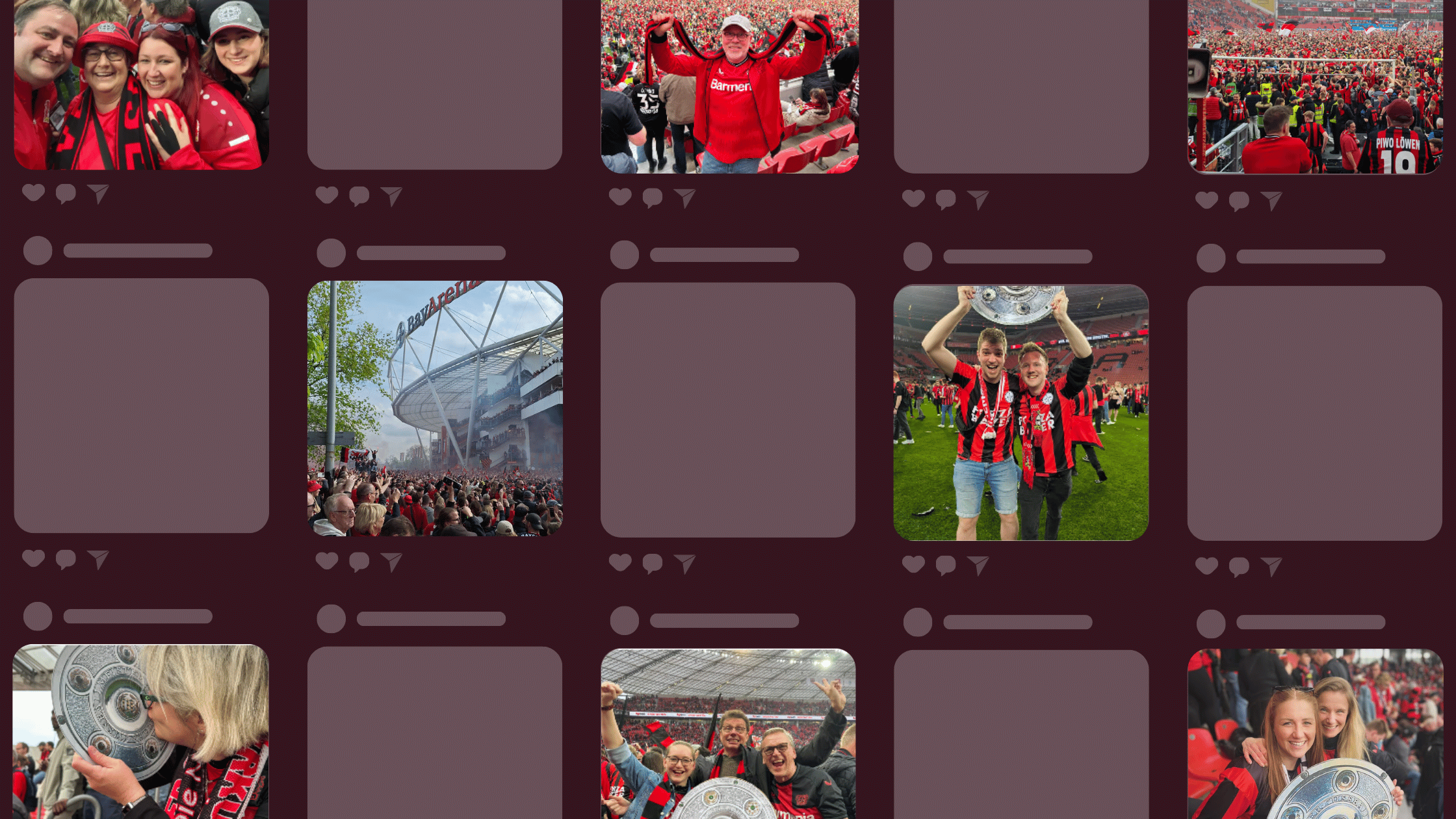
A social feed API can power live hashtag walls, where posts shared during the event appear in real time on screens. This encourages attendees to participate and share their experiences.
For audience engagement displays, showcasing social posts creates excitement and gives attendees recognition. It turns passive audiences into active contributors, both online and offline.
For instance, Messe Düsseldorf is an industry leader in the trade fair space and has managed over 5,000 events in Europe over the past eight decades.
Messe with Flockler displays social content on a large screen and interactive campaigns where attendees participate in real time.

Look at the Messe Düsseldorf x Flockler collaboration for ideas.
3. SaaS & B2B brands
For SaaS and B2B companies, trust is everything.
Featuring customer success stories pulled from social platforms adds credibility to marketing pages. When prospects see real professionals praising a product, it reinforces confidence.
Displaying LinkedIn mentions or industry conversations strengthens authority and thought leadership.
247GRAD is the Koblenz-based agency that develops digital strategies for its clients. 247GRAD embeds social feeds into its customers' websites.
4. Hospitality & travel
In hospitality and travel, visuals sell the experience.
Displaying guest experiences, such as real photos from visitors, helps future guests imagine themselves there. It feels more authentic than staged promotional photography.
For destinations, highlighting location tags and travel moments brings the atmosphere to life. It shows what the experience truly looks like from a visitor’s perspective, which strongly influences booking decisions.
Hapag-Lloyd Cruises, which provides luxury voyages to the polar regions, the Caribbean, Central America, Europe, and more, features UGC Instagram social posts on their homepage with Flockler.

Recommended read: What Is a Social Media Feed API and How to Use It
How a social feed API supports long-term marketing strategy
Every time customers tag your brand, use your hashtag, or mention your product, they’re creating valuable content.
A social feed API instantly captures such content and automatically displays it across your marketing touchpoints, including websites, emails, events, and store screens. This maximizes the value of each piece of content and creates a more unified brand presence.
Over time, this creates a consistent stream of original, meaningful content distributed across multiple channels, driving conversions without extra effort.
A social feed API also centralizes your digital efforts, as content created for social engagement becomes conversion support on landing pages and product pages.
Also, when your website consistently showcases real customer experiences, you rely less on promotional messaging alone.
In the long term, consistent display of organic social proof builds credibility that paid campaigns can amplify to strengthen brand trust without increasing ad spend.
So with the social feed API, you can:
- Repurpose social content on multiple touchpoints
- Collect and refresh posts automatically
- Embedded social posts help paid campaigns to add more impact
When does a brand actually need a social feed API?
A brand likely needs a social feed API when:
- You actively run hashtag campaigns: If your brand encourages customers to use specific hashtags or regularly runs contests and campaigns, you’re already generating valuable user content.
- Your customers regularly tag your brand: When customers frequently mention or tag your brand, it signals that social proof is occurring organically, and you need a social feed API to leverage this for greater impact.
- You want fresh content without manual updates: If your team is constantly downloading screenshots, resizing images, and uploading them manually, it’s inefficient. A social feed API keeps your website updated automatically.
- You rely heavily on social proof for sales: For brands in e-commerce, hospitality, SaaS, or lifestyle industries, trust directly impacts revenue. Using the social feed API helps collect and display these social proof posts consistently on your website helps visitors learn more about your products.
A brand may not need a social feed API if:
- Social media is inactive: If you rarely post or don’t receive customer engagement, there may not be enough content to justify an automated feed.
- The website rarely updates: If your website is static and not used as a primary marketing channel, adding dynamic social content might not add much value.
- UGC is not part of the strategy: If your brand doesn’t encourage customer participation or social sharing, then there may not be meaningful content to display.
Social Feed API vs Static Social Embeds
Static Social Embeds
Static social embeds are a simple yet time-consuming way to embed social feeds on your website.
With static embeds, you can directly copy the embed code from the posts themselves (of any social platform) and paste it into your website’s CMS.
This method is recommended if you:
- Only want to embed a couple of posts
- Do not need any regular support
- Are okay with limited customization
- Do not require any UGC rights permissions
If you think this will work for full-fledged embedding, you must know this process:
- It is time-consuming, as you will only be able to embed a single post at a time
- Offers very basic customization and layout options
- Has no automatic refresh option; you manually have to upload every latest post
- Offers no support if the embedded posts weigh down your website's load time
Social Feed API
The Social Feed API collects multiple posts from different social platforms simultaneously via a single connection.
With the social feed API, marketers can set up within 5 minutes, connect their social accounts, and forget about it.
Once you embed social walls, the wall will keep refreshing automatically and will handle everything like UGC rights, moderation, and analytics on its own.
With the social feed API, you get features like:
- All popular social platform integrations
- Real-time updates
- AI content moderation
- UGC rights management
- Custom API access and custom CSS
- Native or add-on analytics
- Shoppable feeds
- Live support
Use the social feed API over the static social embed if you want:
- To embed multiple posts in seconds
- Refreshed feeds every 15 minutes automatically
- No off-brand posts on your embedded wall
- In-depth customization options available
- Live support for any query
Use Flockler to embed social feeds without any coding
Flockler is an advanced, intuitive platform that offers automated and AI workflows, with a simple setup process.
Flockler offers a complete toolkit for embedding and managing social feeds without much manual effort. Flockler’s key features include:
- Automated and AI moderation
- UGC rights management
- Social Analytics
- Custom CSS and API
- Live chat support
- Shoppable Instagram feeds
You can embed social feeds on the website without any coding in just five simple steps:
Step 1: Sign in to your Flockler account. If you are new to Flockler, you can try our 14-day free trial. Our trial requires no credit card and offers access to all features.
Step 2: Select which social platform you want to pull content from, and connect your social account in the next step to Flockler.
Flockler supports over 13 social platforms, including popular ones such as Instagram, Facebook, TikTok, YouTube, and the latest, Bluesky.
Now, collect multiple posts using keywords or hashtags.
Step 3: In the next step, you add moderation. Flockler offers three types of moderation for your embedded social media wall. These are:
- Manual moderation to approve posts before making them live
- Automated moderation for displaying the latest posts in 5 to 15 minutes
- AI moderation for removing any off-brand or inappropriate posts automatically
Step 4: Add one of the four layouts Flockler offers, such as grids, carousels, social walls, and slideshows.
Step 5: Copy the auto-generated embed code and paste it into your website’s CMS to start displaying visually engaging social media feeds.
See how easy it is to add social proof to your site. Start your 14-day free Flockler trial with no coding needed.
FAQs
Does embedding social feeds affect SEO?
Yes, if high-quality UGC posts are embedded strategically on homepages and product pages, it helps boost the website's SEO. These dynamic posts instantly catch visitors' attention, which increases their dwell time on the website. Also, these posts serve as social proof, adding meaning to the visitor's experience.
How do brands maintain content quality and brand safety in embedded social walls?
Social feed APIs automatically maintain content quality and brand safety in embedded social walls. An API tool like Flockler offers automated moderation to refresh your wall with the latest published posts. It also offers AI moderation that automatically removes any off-brand or inappropriate posts from the wall.
How do you measure the ROI of a social feed API?
To measure the ROI of a social feed API, brands should track time on page, scroll depth, click-through rates from shoppable feeds, campaign hashtag engagement, and conversion rate lift on pages with embedded UGC. Flockler offers Google Analytics integrations and a social analytics add-on to measure these metrics effortlessly.
A true growth operator with extensive experience across crowdsourcing, affiliate programs, and social media aggregation. Brooke is the CEO if Flockler and cofounder of the marketing agency Northweather and has worked with global brands including LEGO. With international experience spanning SaaS, marketing, and product, she brings sharp expertise in strategy, execution, and driving results through global cross-functional teams.
Social infrastructure that scales with you.
Start your free trial, or let us show you the platform in action.