February 5, 2026
The Ultimate Guide to Hotel Social Media Marketing in 2026
X minute read
Social infrastructure that scales with you.
Start your free trial, or let us show you the platform in action.
Social media is no longer just about being seen. It has become a key channel for travel decision-making.
Guests are shaping opinions, comparing hotels, and building trust well before they ever reach your booking engine.
If your content isn’t helping them make that decision, you’re already falling behind. In this blog, learn exactly what to focus on in hotel social media marketing to drive more bookings in 2026.
Why is social media marketing important to hotels?
Much has changed in how people choose hotels today.
Before social media, hotel decisions were search-led and information-heavy. Discovery typically began with price, location, and availability, and the hotel’s website was the primary brand touchpoint.
Today, hotel discovery is visual, emotional, and algorithm-driven. A single reel showing a room view, breakfast spread, or poolside moment can put a hotel on someone’s wishlist instantly.
Becky Feigin, a US UGC influencer, mentioned this mentality in one of her YouTube Shorts:
“I've literally planned entire trips based on a reel that I saw of a hotel that I wanted to stay at. So have my friends. So have so many people. If your Instagram doesn't reflect what staying at your property actually is like, you're missing bookings before guests even hit Google Flights.”
Travelers today research their hotel choices with intention. They look to create memorable moments, not just a place to stay.
This is where social media marketing does the heavy lifting for you.

It helps hotels tell a clear, compelling story, shaping perception, building confidence, and defining what the brand truly stands for before guests ever reach a booking engine.
As Scott Eddy, a luxury travel entrepreneur, puts it in a LinkedIn post:
“Being 'nice,' 'luxury,' or 'well located' isn’t a differentiation anymore. If you don’t define your brand clearly and aggressively, you will be defined by systems designed to commoditize you.”
When a hotel has a real point of view, everything aligns. Pricing feels justified, marketing feels intentional, and guests know the differentiating points that offer a competitive advantage.
Social media marketing also helps hotels to:
- Promote brand loyalty
- Increase brand awareness
- Bring quality traffic to websites
Social media marketing also creates emotional connections through visuals and staff interactions.
How to create your hotel social media marketing strategy for 2026
1. Define your goals with social media marketing
Social media’s job is discovery and desire, not price comparison. Your strategy should focus on showing the experience, not selling the room.
The goal should be to showcase your personal brand in a way that is distinctive and easy to classify.
For example, Watsons Bay Boutique Hotel’s Instagram focuses on aspirational wedding stories set against a coastal luxury backdrop.

Some useful cheat codes include tight positioning, a clear voice, repeatable themes, consistent hook style, and consistent value.
2. Choose platforms based on where discovery actually happens
Instagram and TikTok typically drive the highest discovery for hotels, while YouTube Shorts support long-term visibility.

You can also use Twitter to promote the feeling of a stay with lifestyle imagery, light emojis, and soft CTAs.

You can start with one or two platforms and scale to more over time.
To select platforms for your initial social media strategy:
- Identify where your target guests spend their time online
- Choose platforms that suit your strongest content formats (images, short videos, long videos)
- Consider audience demographics and behavior.
During the testing phase, do not limit yourself to posting a single Reel or TikTok. Commit to a short run, 10 to 20 posts, so the platform can actually understand your property, your audience, and what you stand for.
3. Create content themes and repeat them
Your content should answer three simple questions repeatedly without sounding repetitive. What are you? Who is this for? Why should anyone care?
Scott Eddy suggests creating series content. According to him, “a series trains your audience and trains the algorithm at the same time. One theme, one structure, repeated weekly. Room of the week. Guest experience wins. Staff spotlights. Food and beverage moments. Local secrets. Behind the scenes.”

Also, pay close attention when your posts are a hit. Turn them into a carousel or ads to present multiple angles on the same insight. The idea is to track what’s working and reuse it.
4. Prioritize video as the main content format
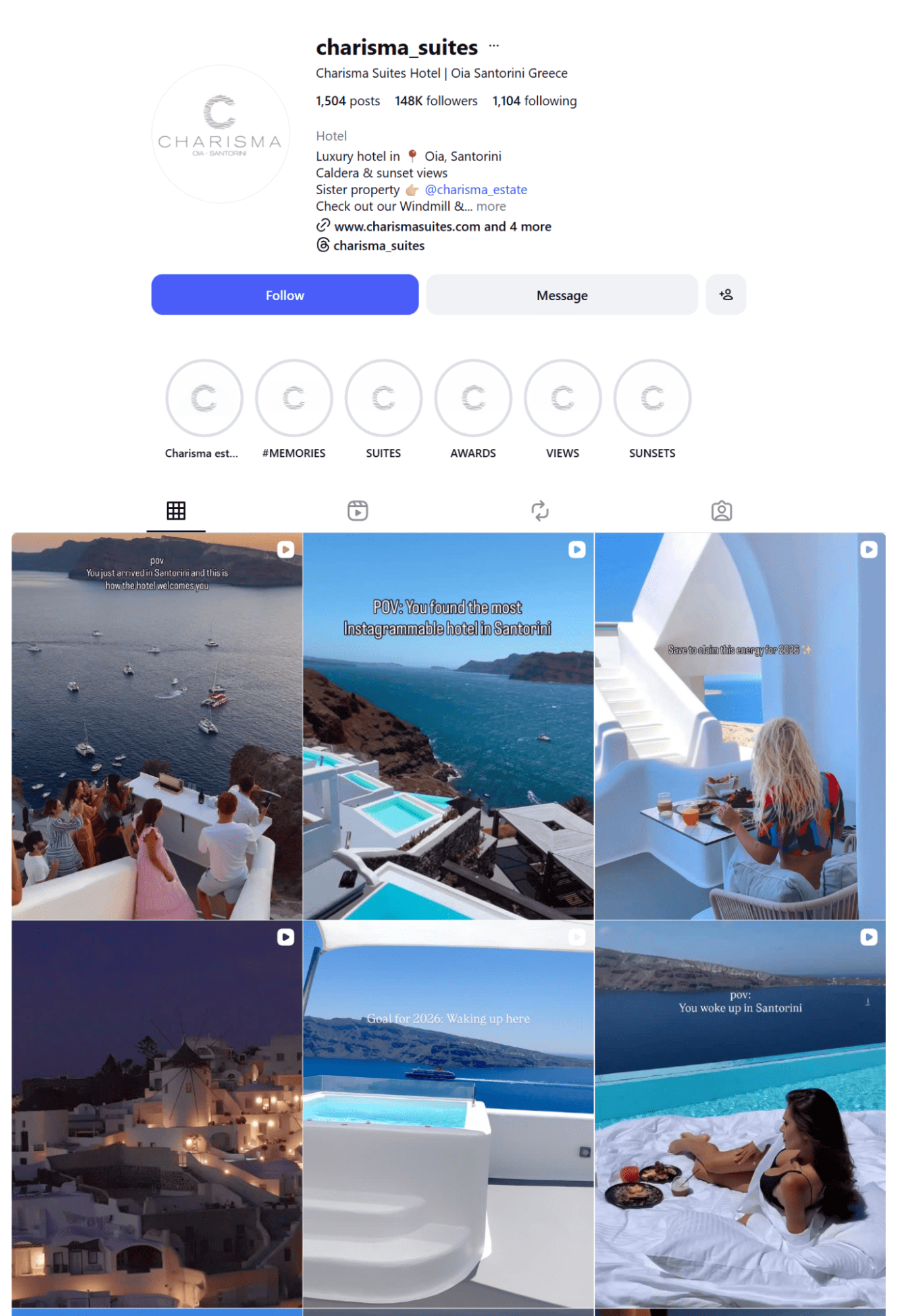
Short-form videos are currently the most engaging content format. They also attract more traffic than usual image posts. Hotels posting vertical video four to five times a week are earning attention.
Use vertical video formats for posting reels and shorts, as they are optimized for mobile viewing and favored by platform algorithms.
You can feature everyone in your short videos, from housekeeping to the GM, alongside moment event setups or a sunrise by the pool.
5. Track what’s actually working (and what isn’t)
If you’re not tracking performance, you’re guessing. Review your analytics weekly to understand which content is resonating and which is falling flat.
Focus less on likes and more on signals that show real intent, such as saves, shares, profile visits, website taps, DMs, and comments. These are the metrics that move people closer to booking.
Top hotel social media marketing ideas for 2026
- Room tours: This is one of the most common content formats hotels use, but it’s also one of the most effective. Showing what your rooms actually look like and the primary services guests expect makes a difference in their booking decisions.
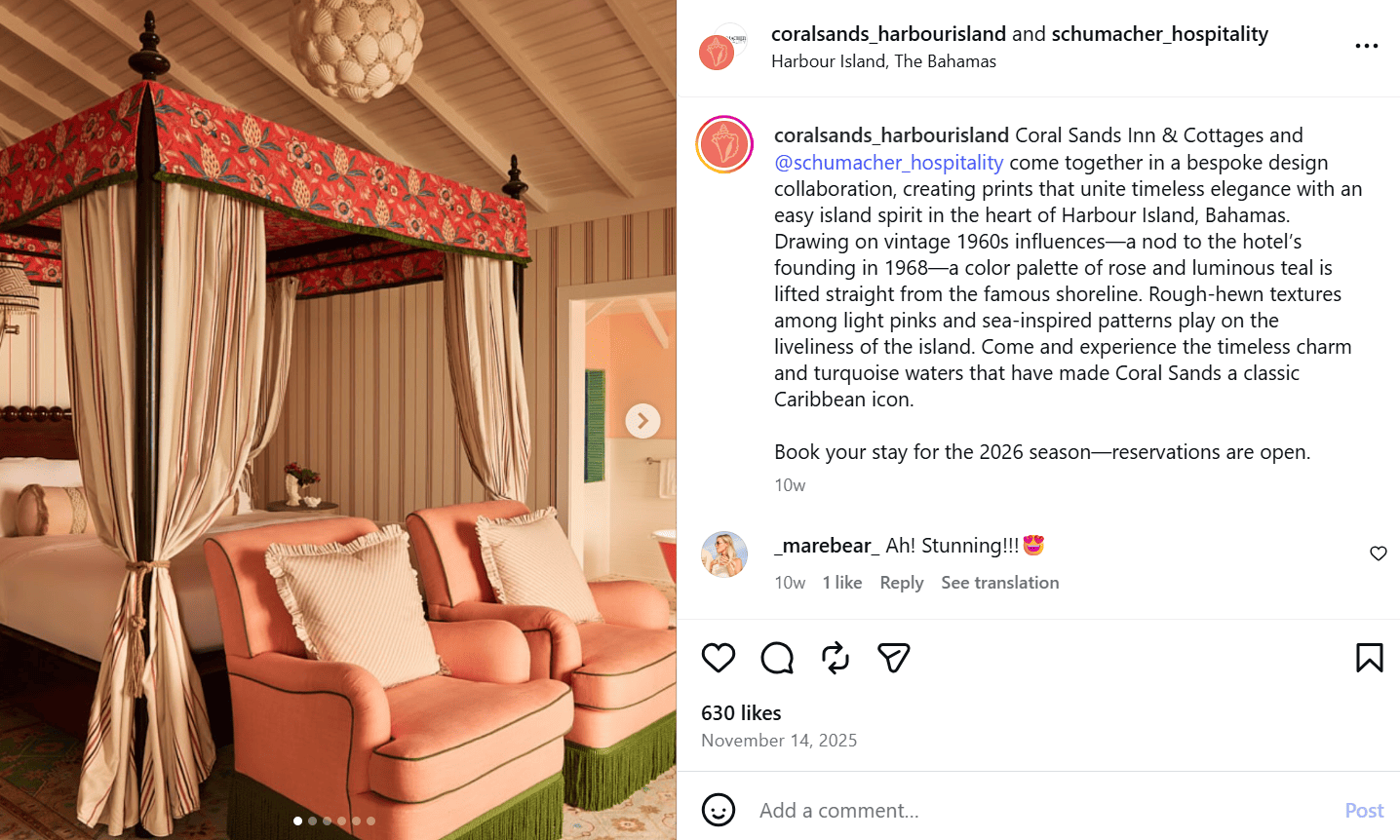
- Staff spotlights: Introduce your housekeeping, chefs, concierges, or GM to your social media accounts. It creates an emotional connection with your guests.

- Guest POV videos: Repost guest-shot Reels or TikToks that show arrivals, room reveals, or celebrations. These work as social proof without feeling promotional.

- Hotel views: Post photos of your hotel’s surroundings to enhance visual appeal. It immediately captures viewers' attention and helps bring attention to your profile.

- Local experiences & hidden gems: Highlight nearby cafés, beaches, walking routes, and other attractions on your social channels. This helps guests better understand what they wouldn’t find on booking platforms.

- Influencer collaboration: Post influencer content following a real guest itinerary: breakfast, spa, pool, dinner, sleep, and sunrise. This format mirrors how travelers research and shortens the decision cycle.
Top hotel social media marketing tips for your business
These are top tips shared by Scott Eddy in his recent conversations:
1. Put your GM and leadership team on camera
People trust people, not logos. Seeing a familiar leadership face builds credibility faster than any brand campaign. When guests recognize who is behind the experience, curiosity turns into confidence, and confidence drives bookings.
2. Optimize for AI discovery, not just the feed
Social platforms and AI search tools now surface content based on context, not aesthetics. Your captions, on-screen text, and spoken words should clearly state who you are, where you are, and what makes your hotel worth choosing. If AI can’t understand your property, it can’t recommend it.
3. Consistency beats virality, every time
One viral post creates noise. Consistent posting creates momentum. Algorithms reward steady output because it signals relevance and reliability. Ten strong posts a week will outperform one breakout hit over time, especially for travel decisions that require repeated exposure.
4. Treat your comments section like marketing real estate
Every comment is a chance to build trust publicly. Reply quickly, reply like a human, and ask follow-up questions when possible. Active conversations signal credibility to both potential guests and platform algorithms.
5. Prioritize smaller creators over big influencer names
Large influencers bring reach but often low intent. Creators with 5K to 50K followers typically command greater trust and higher engagement because their audiences perceive them as personal and credible. For hotels, many relevant storytellers outperform one glossy campaign.
6. Precision storytelling wins
Generic travel content blends in instantly. Ultra-specific storytelling cuts through. Boutique hotels, wellness resorts, expedition cruises, and food-driven properties grow faster when they own a narrow narrative and serve it consistently, rather than trying to appeal to everyone.
7. Real spaces beat polished templates
The designed graphics look clean but are easy to overlook. Real spaces, natural light, movement, and everyday moments stop the scroll. Hospitality already has a built-in visual advantage; brands that show it honestly win attention and trust faster.
Embed UGC social posts on your hotel websites for higher booking confidence
Your high-quality social posts are a goldmine for your website. They not only make your website engaging but also more meaningful for your new visitors.
When visitors see user-generated content integrated on your homepage, it helps them visualize their stay and read real guest reviews to make their final decision without wasting much time.
If you’re already investing in social media storytelling, it’s smart to extend that effort to your primary marketing touchpoint.
Some of the other key benefits of adding social posts on your website are:
- Increases dwell time, which boosts SEO
- Establish credibility with the latest social proof posts
- Reduces bounce rates by giving visitors more content to explore
- Keeps pages dynamic with real-time, authentic content
Hotels currently embedding social posts on their websites include Hilton, Acqualina Resort & Residences On The Beach, Hard Rock, Romantik Hotels, Equinox Hotels, Four Seasons Resort Hualalai, Maui at Wailea, and others.
Learn how to embed social media feeds on your hotel website without coding
Step 1: Sign up for your Flockler account. You can also start a 14-day free trial instantly. The trial requires no credit card and gives users access to all information.
Step 2: Connect your social platforms (Instagram, TikTok, or others) with a single click and use keywords, hashtags, or profiles to pull multiple posts at once. Flockler supports over 13 social media channels.

Step 3: Next, add moderation to your embedded social feeds. Flockler offers three types of moderation: manual, automated, and the Garde AI tool.

For marketers:
- Manual moderation allows them to review posts manually
- Automated moderation automatically refreshes content every 5 to 15 minutes.
- AI content moderation automatically removes any off-brand posts from the wall.
Step 4: Design your social wall outlook by adding layouts. Flockler offers four layouts: Grid, Carousel, Social Walls, or Slideshows. Marketers can also customize themes, fonts, and colors with simple, intuitive steps.

Step 5: Copy the auto-generated embed code and paste it into your website's CMS.

Flockler offers compatibility with:
If you’re investing in social media, make it work harder for your website too. Show off your guests’ social posts in beautiful layouts with Flockler. Start Flockler’s 14-day free trial and explore AI moderation, customization, and analytics.
FAQs
Should hotels prioritize brand content or guest-generated content on social media?
Both matter, but they serve different roles. Brand content defines positioning and sets expectations, while guest-generated content validates the experience through real proof. Hotels that blend clear brand storytelling with authentic guest moments build stronger credibility and conversion confidence.
How can hotels maintain brand consistency across multiple properties on social media?
The key is shared structure, not identical content. Central teams should define core themes, tone, visual standards, and posting guidelines, while individual properties localize content with their own staff, guests, and surroundings. This keeps the brand recognizable without feeling generic.
How often should hotels post on social media to stay competitive in 2026?
Consistency matters more than frequency. For most hotels, posting 4 to 6 times a week on one or two core platforms is enough to stay visible and train platform algorithms. The focus should be on repeatable formats and themes rather than chasing daily virality.
Avika Dixit is a B2B SaaS and e-commerce writer with expertise in social media marketing, content strategy, and customer engagement. Over the past three years, she has created long-form, SEO-driven content that helps businesses understand and leverage tools like social proof platforms, UGC aggregators, and digital experience solutions.
Social infrastructure that scales with you.
Start your free trial, or let us show you the platform in action.