November 26, 2025
The Complete Guide to Social Media Integration for 2026
X minute read

Social infrastructure that scales with you.
Start your free trial, or let us show you the platform in action.
Social media today influences almost every buying decision, and by 2026, it’s no longer something brands can treat as a separate channel.
Your potential customers want to see real experiences and reviews on your marketing channels, whether that’s your website, emails, product pages, or even digital screens in your store.
That’s where social media integration comes in. It brings all your best social content, such as UGC, testimonials, influencer posts, and live updates, into the places where your audience is already exploring your brand.
In this guide, we’ll walk through what social media integration really means in 2026, and why it matters now more than ever.
What does social media integration mean?
Social media integration connects your website, apps, or other marketing tools with your social media channels, allowing you to share content easily and enhance user engagement.
Social media integration enables marketers to display their BoFu content, including UGC, social proof, testimonials, and influencer collaborations across multiple digital touchpoints.
There are several aspects of social media integration, including:
- Adding social sharing buttons
- Embedding UGC social feeds
- Using social login
- Social media management tools
Learn more about these social media integration strategies.
1. Adding social sharing buttons for easy profile access
Social sharing buttons are clickable icons integrated into websites, emails, or blogs that let viewers navigate directly to the brand’s social media profiles.

They help users find your official profiles, where they can either share their UGC content or simply explore your page and learn more about your brand.
Anyone can easily add multiple social platform buttons to their website, blogs, or emails with tools like AddThis, ShareThis, AddToAny, and more. Almost every e-commerce brand uses social sharing buttons on its webpages and in emails.
2. Embed social media feeds to boost credibility and conversion
Embedding social media feeds, such as UGC, hashtag campaigns, social proof, influencer collaborations, and new launches, helps visitors stay updated and discover genuine reviews of your brand.
It makes your website more engaging, as dynamic visuals and featuring real faces on your webpages instantly catch attention. It also adds credibility to your website with authentic reviews.
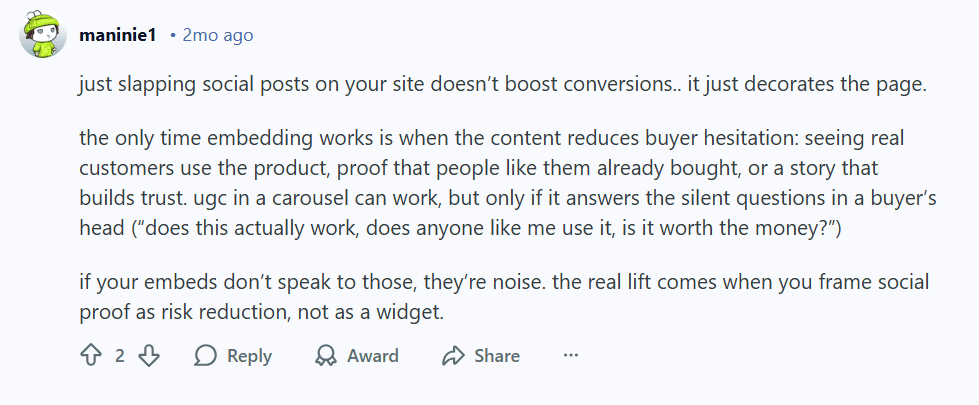
Make sure you embed relevant posts and do contextual placement, as mentioned by this Reddit user:
You can use Flockler to embed social media feeds on your website, events, or store screens without any coding required.

With Flockler, users can set up their social wall and forget about it, as automated and AI moderation refreshes content automatically every 10 to 15 minutes and blocks any off-brand posts.

Many brands, like GoPro, Worktop Express, Peter Dunham Textiles, SoHome, Somerset Grill Company, and more, use Flockler to embed shoppable and UGC social feeds on their websites.
3. Add Social Logins for users to access your website instantly

Social logins allow visitors to use their social media account information to create a brand account. It lets visitors access the site instantly without the friction of filling out forms, remembering passwords, or verifying email addresses.
It lets users return to your website easily without having to remember their username, password, or email ID.
4. Use Social media management for easy content creation
Social media management tools help brands handle everything they need to do on social media from a single dashboard.
They allow users to find, create, manage, and publish new content ideas without much manual effort. You can also monitor your content performance and support ad management.
Tools like Buffer, Hootsuite, and SocialPilot offer everything you need to manage and track your social media in one place.
5. Use social listening tools for monitoring your audience's sentiments
Social listening tools help brands stay aligned with audience expectations as people are more vocal on social media platforms.
With listening tools, users can study and monitor people's sentiments, industry trends, a brand’s reputation, and competitors' strategies to optimize their social media and overall marketing strategy.
Here is how to do it right:

Marketers can use Sprout Social, Brandwatch, or Brand24 for social listening on multiple platforms.
6. Use influencer marketing tools to manage collaborations and track performance
With influencer marketing tools like Later or Upfluencer, marketers can easily find relevant influencers for collaboration and launch campaigns faster on social platforms.
These platforms help you find influencers, send emails, track deliverables, and access performance analytics from one dashboard.
Learn about 13 such social media integration tools that can help you build stronger trust with your audience.
Why is social media integration important?
1. Your customers trust social proof more than ads
User-generated content is having a greater impact on people than your ads. They feature real people, genuine reviews, and products in action, which makes your brand more believable.
Integration helps display UGC feeds easily on multiple digital touchpoints and presents authentic content that reassures visitors that they’re making the right choice.
2. It connects all your digital touchpoints
Your brand has multiple marketing channels across different platforms, and a social media integration tool ensures all these touchpoints communicate with each other.
It brings your social content onto your site, emails, or ads, sends website visitors back to your social channels, and keeps everything aligned.
3. It boosts engagement and keeps your website fresh
Social feeds are dynamic and instantly capture people's attention with diverse content. Embedding relevant social feeds on your homepage or product pages keeps your website updated in real time and gives visitors more reasons to stay, scroll, and interact with your brand.
4. It helps you convert social traffic into sales
Instead of letting engagement stay on social platforms, integration brings those interactions to your website, turning attention into action, whether that’s a purchase, sign-up, or inquiry.
It reduces marketing workload with automation, as marketers can auto-sync posts, moderate content, track performance, and streamline processes. This helps teams stay consistent even with limited resources.
5. It makes your brand appear more active and credible
Inactive websites or outdated blogs can lower trust. Social media integration ensures your site always displays fresh, real-time content that reflects your brand’s ongoing activity.
Use cases and benefits of using social media integration
For E-commerce and retail
Businesses can:
- Embed UGC shoppable feeds on your product pages to showcase social proof and drive trust in your products. Tagging products in the feeds can serve as a gentle nudge for visitors to explore highly rated products.

- Embed hashtag campaigns and influencer collaborations on the homepage and retail store screens to showcase your loyal community. This helps visitors become more familiar with your brand, building their confidence to make their first purchase.

- Use social logins for easy sign-ins and logins to your website. This reduces friction when entering their email and name, along with a password, and encourages more visitors to explore your website.
- Use a social media management tool to create content consistently in an automatic mode, even when the marketing team is busy. Being consistent in your content helps people perceive your brand more positively.
- Use social listening tools to track trends and your audience's sentiments. This gives you a competitive advantage, as you can react faster to market changes.
For education
Schools and universities must:
- Embed the latest news and updates regarding campus, faculty, admissions, and events on your website. It centralizes information for students who may not follow you on social media.

- Add campaigns and charity event feeds to highlight your institution's values and vision. This creates an emotional connection with your students and parents and drives a deeper sense of trust and connection.
- Add student and alumnus stories to your homepage to highlight your community. This helps students understand your culture and the impact they can expect when they join your institution.

For Sports
Marketers can:
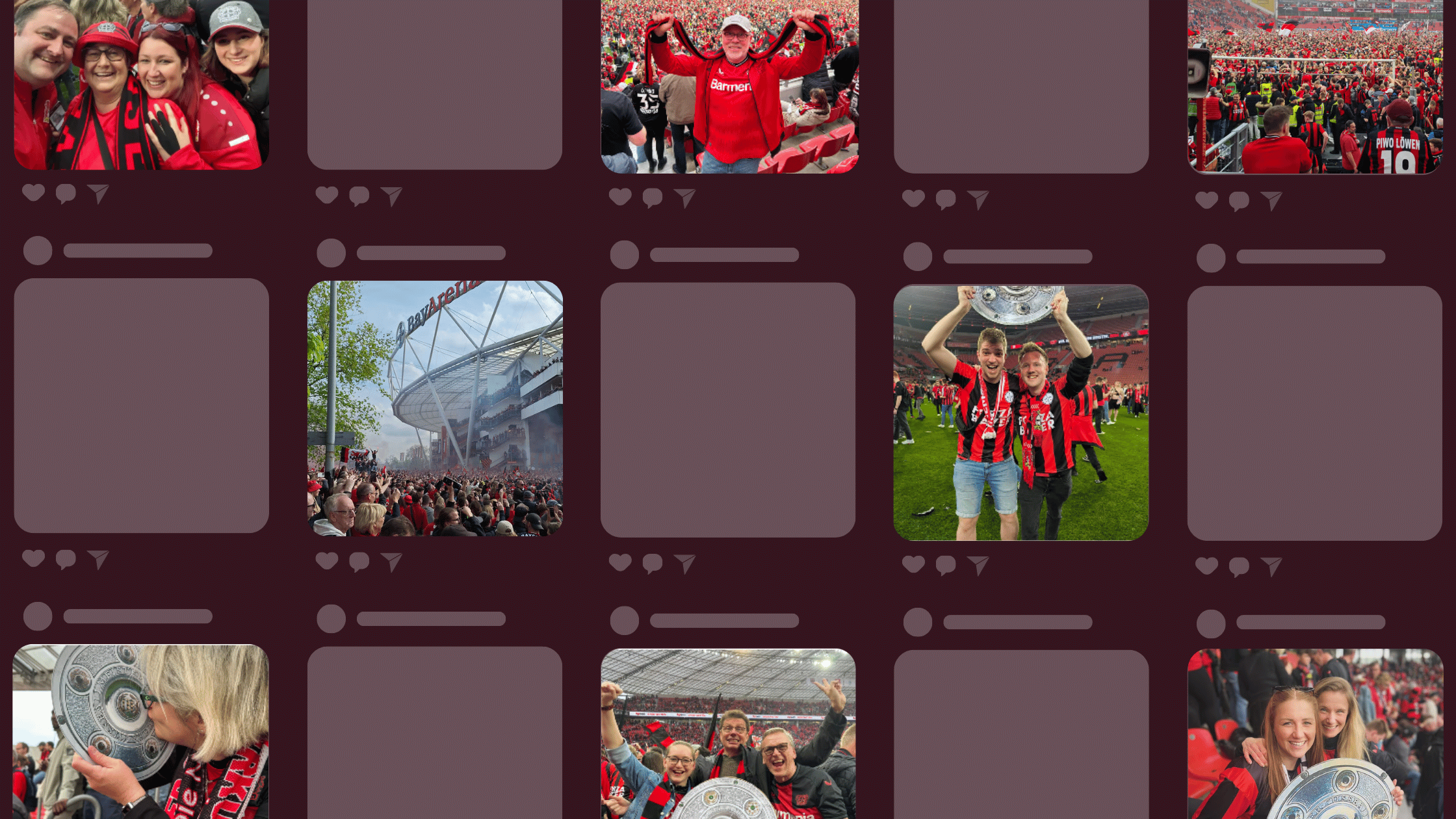
- Embed fan-generated content on your homepage or merchandise page to drive more sales conversions. Tag your ticket or product page to encourage fans to take action. Adding UGC helps fans connect emotionally to the experience they can expect at your games or events.
- Embed players, staff, and media content to give fans behind-the-scenes moments and a closer look at match day and training shenanigans.

- Display live social feeds on stadium screens to boost excitement among attendees and give them a community-driven experience.

For Corporate
HR can:
- Embed employee-generated content on the About Page to highlight your work culture and employees’ mindset towards your company and its vision. This drives trust as new hires or candidates become more familiar with your team.

- Embed news, updates, and employee shoutouts on intranets to boost internal engagement and make employees feel valued. This establishes a more positive culture and creates a strong sense of belonging.
For tourism and hospitality
Marketers can:
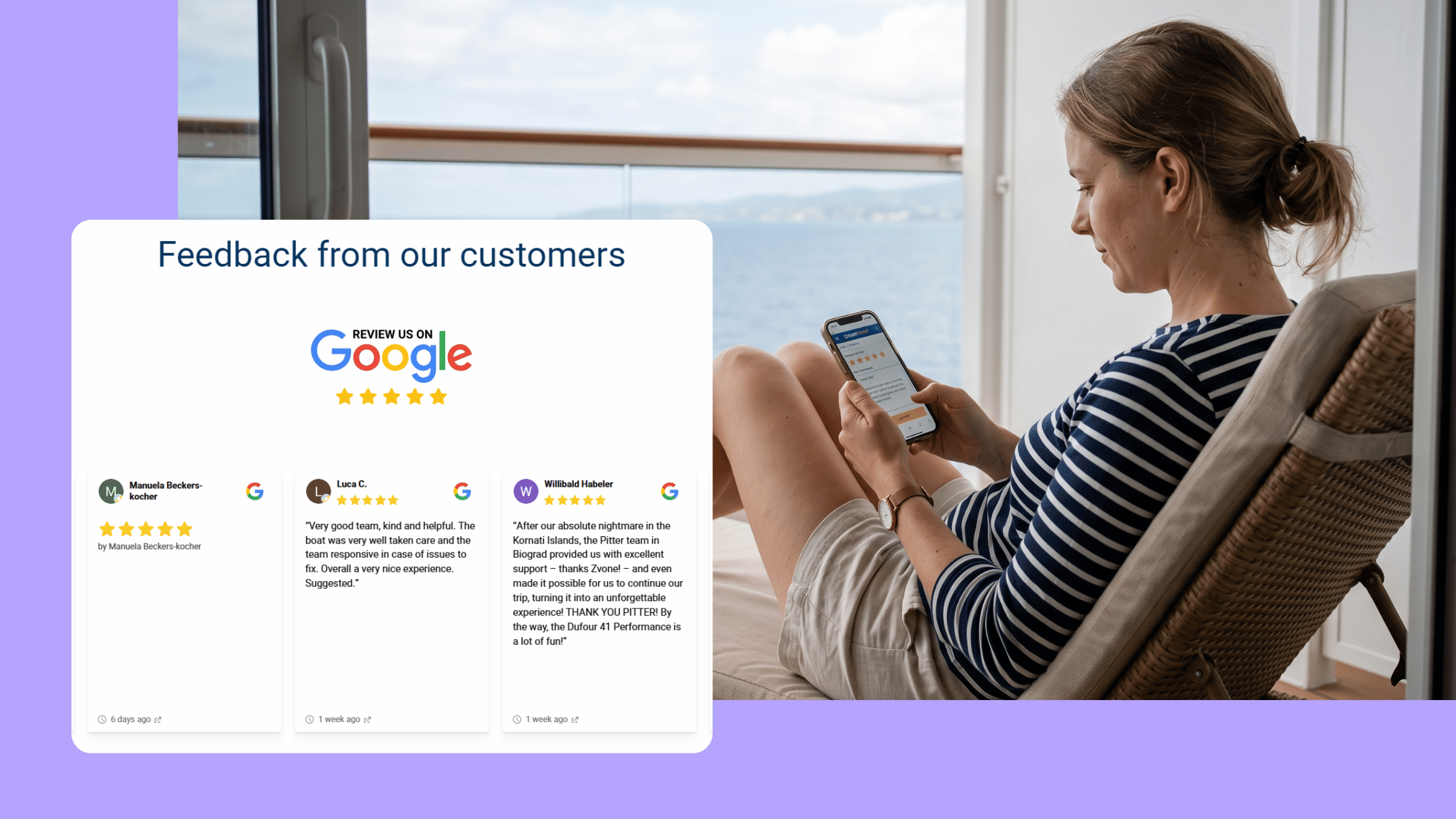
- Embed UGC content and travel inspiration posts for people to visualize their next trip. This creates an emotional connection with people, as they feel you understand their itinerary needs, and makes them feel more confident about booking with your brand.

- Embed loyalty program feeds to highlight exclusive rewards and motivate repeat bookings. This helps people see the ongoing value of staying connected with your brand.
- Embed influencer posts, as they act as credible recommendations and inspire travelers to take action. Influencers also create visually stunning content that serves as bonus UGC for your potential travelers/guests.
AI in social media integration and the future
AI is transforming how social integration tools work. They are now offering AI and automation capabilities to help their users work faster and make data-backed decisions.
For example, Flockler offers AI content moderation to remove inappropriate posts from your embedded social wall, and AI alt-text generation for images to improve accessibility.
AI also makes content creation easier. It can generate post ideas, rewrite captions, suggest hashtags, and even adapt formats for different platforms.
For social listening, AI analyzes digital conversations in seconds, spotting trends and sentiments in real time.
AI is becoming increasingly important, making it an essential feature for social media integration tools.
In the future, AI will make social media integration even more predictive and interactive. AI will auto-create content variations, predict trends earlier, and turn social walls into fully adaptive, real-time experiences.
Recommended read: Future of AI in Social Media
FAQs
What are some social media integration website examples?
Examples of social media integration on websites include embedding UGC feeds and social sharing buttons. Many brands also use social logins for users to sign in to their websites. They are all done to make the visitor experience more meaningful, as social login provides ease (no passwords), sharing buttons give access to social profiles, and embedding feeds provides context.
Can you name some social media integration apps?
Yes, social media integration tools do a variety of things. For embedding social media feeds into your website, email, ad, or events, marketers can use Flockler, Walls.io, Taggbox, Juicer.io, or Flowbox. For creating and managing content on multiple social channels, you can use Buffer, Hootsuite, SocialPilot, or Sprout Social.
How is AI integrated into social media?
AI can be used to create, manage, and publish social media posts on your channels. With social media management tools such as Buffer, Hootsuite, or Sprout Social, marketers can leverage AI capabilities to reduce manual effort. They offer AI for content ideation, creation, and management, helping users stay consistent with their marketing strategies.
Avika Dixit is a B2B SaaS and e-commerce writer with expertise in social media marketing, content strategy, and customer engagement. Over the past three years, she has created long-form, SEO-driven content that helps businesses understand and leverage tools like social proof platforms, UGC aggregators, and digital experience solutions.
Social infrastructure that scales with you.
Start your free trial, or let us show you the platform in action.